

Deep Engagement with Local Communities: Seth Asare Okyere, Visiting Assistant Professor of Urban Planning and Emerging Faculty Fellow
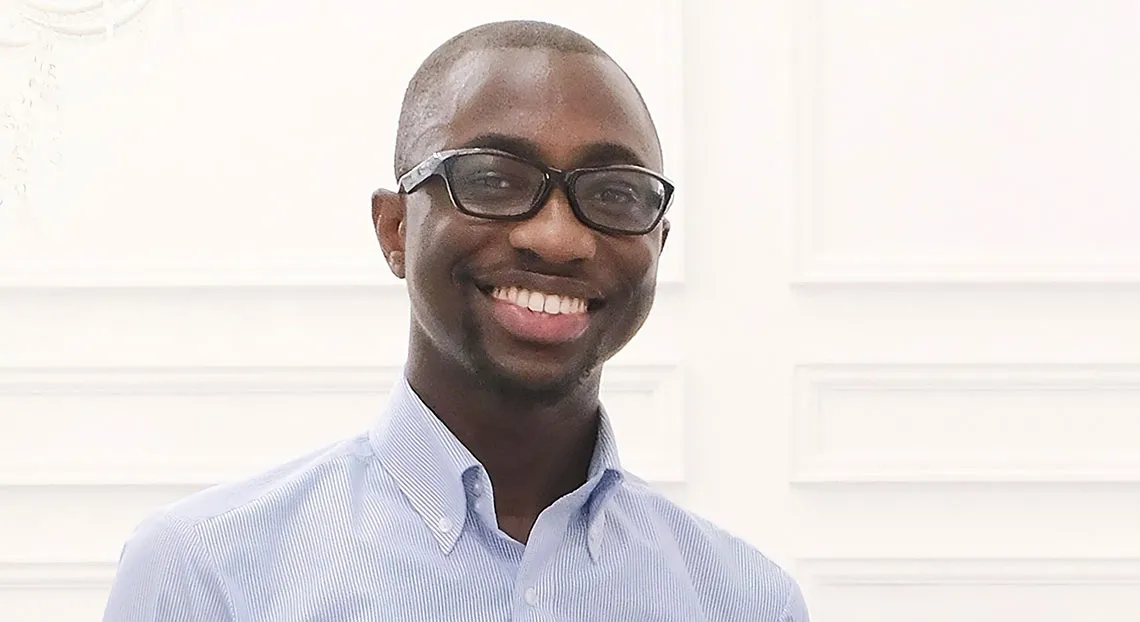
Six Questions with Seth Asare Okyere, Visiting Assistant Professor of Urban Planning
"I came here because of CAPLA’s strong commitment to the grand challenges of our times and exemplary leadership in championing new models to respond to some of the big questions around human transformation in the built environment."
What brought you to CAPLA to serve as a visiting professor?
We are at a crucial moment in the history of human transformation that requires leadership, scholarship and ethical practices that champion equitable and sustainable futures for all, especially the marginalized. I came here because of CAPLA’s strong commitment to the grand challenges of our times and exemplary leadership in championing new models to respond to some of the big questions around human transformation in the built environment. It is an exciting match with the values and goals that underpin and drive my research and engagement practices. There couldn’t be any better place to develop my career in this period of my transition.
What is your current research and what most excites you about this work?
My current research seeks to document and advance socio-spatial and environmental aspects of everyday southern urban experiences from the perspective of social equity and community resilience planning in Africa and Southeast Asia. I delight to sit at the junctions of scholarship, intersecting international development planning, sustainable urbanism and community resilience through locally rooted interdisciplinary work and deep engagement with local communities. The overarching theme in multiple ongoing international collaborations is to highlight the divergences between the framings of sustainability/resilience and everyday local urbanisms and to elevate the role and agency of marginal communities to creatively and empathetically shape sustainable communities. It is so exciting to be part of impactful research, working together with scholars, practitioners and communities to contend and contest deep-rooted practices that reproduce inequities for the deprived.

Engaging elementary school students in community awareness and planning in Kaizuka, Osaka. Japan. Photo courtesy Seth Asare Okyere.
Tell us about your work with school-based development and indigenous communities.
I am currently the international project coordinator of a school-based development (SbD) project that seeks to create planning awareness and build the capacity of school children in indigenous areas to contribute to the development of their local communities in child-friendly and fun ways. This is an international collaboration of several universities in Asia and Africa seeking to integrate indigenous knowledge and experiences by working with local teachers, pupils and community organizations. It is a fulfilling process to view local people as important agents in co-learning and eventually co-producing knowledge and action that embraces the values and aspirations of the often-marginalized in rapidly growing but highly unequal southern cities.
What are you teaching next semester, and what do you most enjoy about teaching?
I am teaching the Southern Urbanisms class next semester. Sometimes discussions about urbanism and urban experiences become so caged in the western discourses to the point that one forgets there is “the urban elsewhere.” Fostering equitable and just futures demand extending our reach across the Atlantic, to learn but also be inspired in our shared urban humanities. I am excited to be bringing up this theme of an international dimension to the theories, questions, practices and experiences of what it means to be “urban” in the global south here at CAPLA. It is a wonderful opportunity for students to see the similarities that connect the planet and peoples of this urban generation but also the differences that demand critical appraisal of thinking and “doing” planning outside of the West. Who knows, our globally aware generation of students here may well be the next future collaborators working with southern urbanists to champion sustainable and just societies for all.
Beyond research and teaching, what are your passions?
I am new to Tucson and still trying to figure out my outdoor passions. I am thrilled by the sight of the rugged desert mountains all around the city—so refreshing. I hope the weather improves to have some time in nature and immerse myself in food cultures—a symbol of the exciting identities we bring to the social table.
What advice do you have for CAPLA students?
Have a growth mindset. Challenge yourself to learn new skills, read new books and get out of your comfort zone. Pursue opportunities for collaborative work, especially in interdisciplinary orientation, and engage with communities. Seek the good of others and uphold the values of empathy and creativity. To the students I say, come on in, my doors are open to you.


