Coverdell Fellow Profile: Ramzy Bejjani '21 MLA

April 3, 2020

Ramzy Bejjani served as a Peace Corps Volunteer in northern Ethiopia before joining CAPLA's Master of Landscape Architecture program.
Overview
CAPLA has a strong community of RPCVs, including many in the Master of Science in Urban Planning and Master of Landscape Architecture programs. We will be highlighting their stories throughout the year.
Who
Ramzy Bejjani, Master of Landscape Architecture student.
What
Student Profile
Image
Ramzy Bejjani

The University of Arizona is one of only two universities in the country to offer Coverdell Fellowships to Returned Peace Corps Volunteers (RPCVs) who are enrolled in a graduate landscape architecture program. The Coverdell Program provides tuition assistance and internship opportunities. Coverdell Fellows find a robust Peace Corps community at the University of Arizona and in Tucson, and many are CAPLA alumni.

Tell us where you went! How did that change your life?

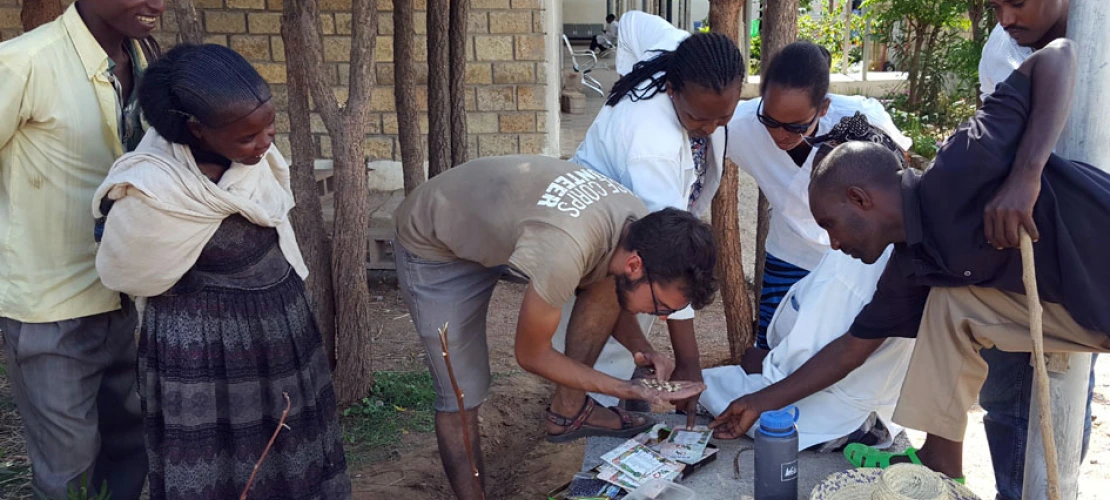
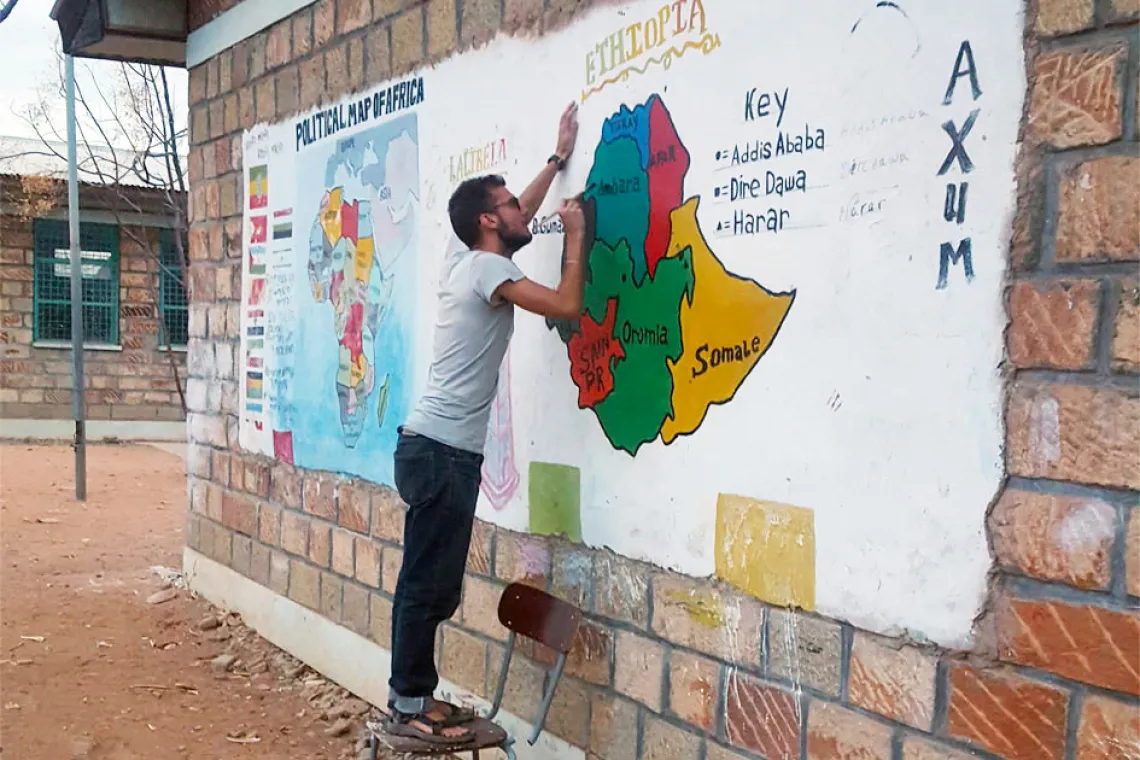
I went to the Tigray region in northern Ethiopia to teach English as a foreign language. It changed my life in ways I still have yet to understand. But it also allowed me to come to Tucson and the University of Arizona.

How did the experience lead you to studying landscape architecture at CAPLA?

After sitting on a bus stuck in traffic for hours with someone’s grandma and her chicken on my lap, a lone biker passed our immobile bus. I had the revelation that urban form and design has the power to dictate everyone’s quality of life, and that quality design was perhaps a more effective way to empower people than traditional development practices.  

Tell us about your current fellowship.

I’m an intern with Living Streets Alliance, a local Tucson non-profit that advocates for streets to be used a public spaces that connect people to places and to each other. It’s an internship where I’m always learning a new skill, and my responsibilities range from volunteer management to street planter maintenance and from publication graphic design to public bike repair. I work with an amazing team of community organizers who have taught me just as much as I’ve learned in university.

How do you plan to change the world?

By doing my little part to make sure that everyone is empowered to safely walk or bike or rollerblade or scooter or what-have-you to wherever they need to go. 


Subscribe to The Studio

Sign up for CAPLA's monthly e-newsletter to get the latest news and events, insights from faculty and leadership, profiles of students and alumni and more.

Subscribe Now

Latest CAPLA News, Projects and Profiles

Image
Group photo of four CAPLA students who are members of the ISAPD

CAPLA to host Indigenous Design Symposium focused on community, sustainability

CAPLA’s Indigenous Society of Architecture, Planning and Design (ISAPD) will host an all-day symposium on April 6, bringing together students, faculty and practitioners to explore Indigenous approaches to the built environment. Featuring Indigenous designers and supported by campus partners, the event will highlight community-centered design, sustainability and the role of Indigenous knowledge systems in shaping more responsible relationships with land.

Image
Six students and faculty work together to lift the frame of a wall for a house they are building in Agua Prieta

CAPLA students build housing in Agua Prieta during spring break

CAPLA students spent spring break in Agua Prieta, Sonora, building a home for a local family in partnership with Rancho Feliz. Working alongside community members, they gained hands-on construction experience while contributing to a reciprocal housing program designed to address affordability and climate-responsive design.

Image
Jackie Hogan Headshot

Research-Based Approach to Architecture: Jackie Hogan M.Arch + MS.Arch ‘25

Jackie Hogan (’25 M.Arch + MS.Arch) is a dual-degree graduate of CAPLA whose work bridges architectural practice and research-driven design. Drawn to architectural history, theory and ethics, she pursued the M.Arch + MS.Arch dual degree to explore how research can shape meaningful design decisions. During her time at CAPLA, she engaged in community-centered design through Laura Carr’s studio working with the Tuba City community and completed a thesis examining architecture’s role in disaster relief and climate-related emergencies. Now working at Line + Space, Hogan brings an evidence-based approach to projects, applying research to create thoughtful spaces that connect people, culture and the environment.