
Lecture Recap and Video: Beth M Weinstein on Rendering Sensible (In)Visibilities Around Architectures of Internment
Nov. 2, 2020
Who
Beth M Weinstein, Architect and Associate Professor of Architecture, The University of Arizona
What
CAPLA Lecture Series Event
When
October 2, 2020
Image

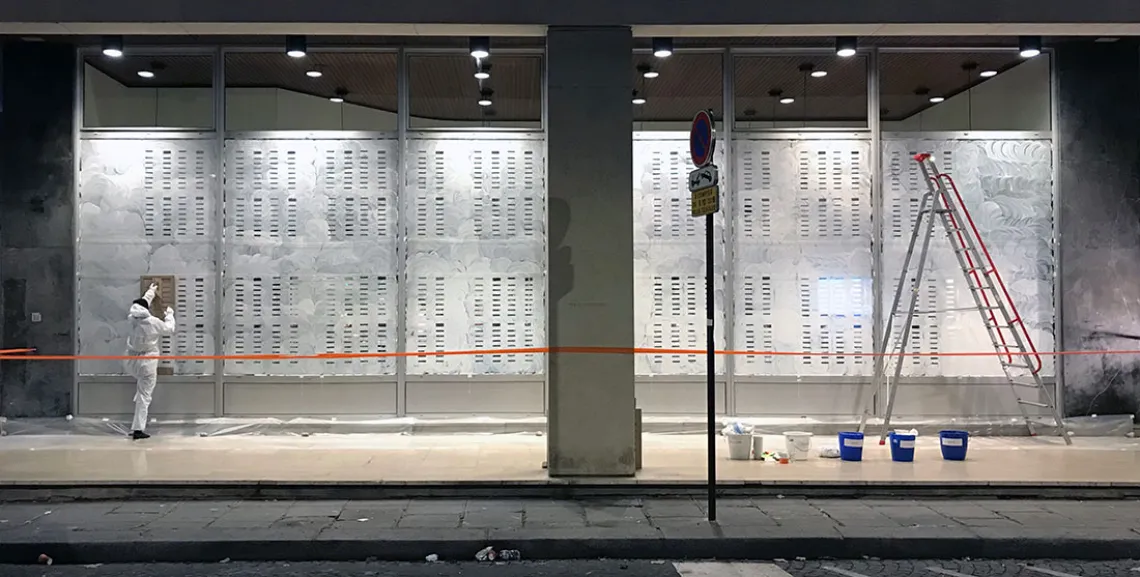
Photo by Anna McGrath.

Beth M Weinstein PhD is associate professor at the University of Arizona and an architect moving between architectural, art and performance practices.  

Her recent practice-based research correlates two seemingly unrelated forms of invisibility—hidden architectural labor and invisibility perpetuated through spaces of internment. Through performance-installations employing text-iles, architectural drawing/erasing, and (un)modeling, she explores making the internment camps’ (in)visibility sensible, or knowable through the senses.

Two case studies of razed camps framed the project. The first examined four Japanese American internment camps in the American West mandated by Executive Order in which interned citizens wove camouflage for the US Army. The second investigated, and digitally reconstructed, the obfuscated Centre d'Identification de Vincennes formed under France’s State of Emergency Law to detain Algerians during their war of independence. 

Weinstein’s embodied, situated and archival research revealed several protagonists. Their labor, and the camps’ spaces, traces, and atmospheres, informed the performance-installations she discusses in her lecture, and their constitutive choreographies and materialities that oscillated between the hyper-visible and barely detectable.

Weinstein's lecture was part of the School of Architecture Lecture series and CAPLA Lecture Series.


Watch the Lecture


Subscribe to The Studio

Sign up for CAPLA's monthly e-newsletter to get the latest news and events, insights from faculty and leadership, profiles of students and alumni and more.

Subscribe Now

Latest CAPLA News, Projects and Profiles

Image
Group photo of four CAPLA students who are members of the ISAPD

CAPLA to host Indigenous Design Symposium focused on community, sustainability

CAPLA’s Indigenous Society of Architecture, Planning and Design (ISAPD) will host an all-day symposium on April 6, bringing together students, faculty and practitioners to explore Indigenous approaches to the built environment. Featuring Indigenous designers and supported by campus partners, the event will highlight community-centered design, sustainability and the role of Indigenous knowledge systems in shaping more responsible relationships with land.

Image
Six students and faculty work together to lift the frame of a wall for a house they are building in Agua Prieta

CAPLA students build housing in Agua Prieta during spring break

CAPLA students spent spring break in Agua Prieta, Sonora, building a home for a local family in partnership with Rancho Feliz. Working alongside community members, they gained hands-on construction experience while contributing to a reciprocal housing program designed to address affordability and climate-responsive design.

Image
Jackie Hogan Headshot

Research-Based Approach to Architecture: Jackie Hogan M.Arch + MS.Arch ‘25

Jackie Hogan (’25 M.Arch + MS.Arch) is a dual-degree graduate of CAPLA whose work bridges architectural practice and research-driven design. Drawn to architectural history, theory and ethics, she pursued the M.Arch + MS.Arch dual degree to explore how research can shape meaningful design decisions. During her time at CAPLA, she engaged in community-centered design through Laura Carr’s studio working with the Tuba City community and completed a thesis examining architecture’s role in disaster relief and climate-related emergencies. Now working at Line + Space, Hogan brings an evidence-based approach to projects, applying research to create thoughtful spaces that connect people, culture and the environment.