

Noémie Despland-Lichtert receives ACSA Travel Grant for Emerging Faculty
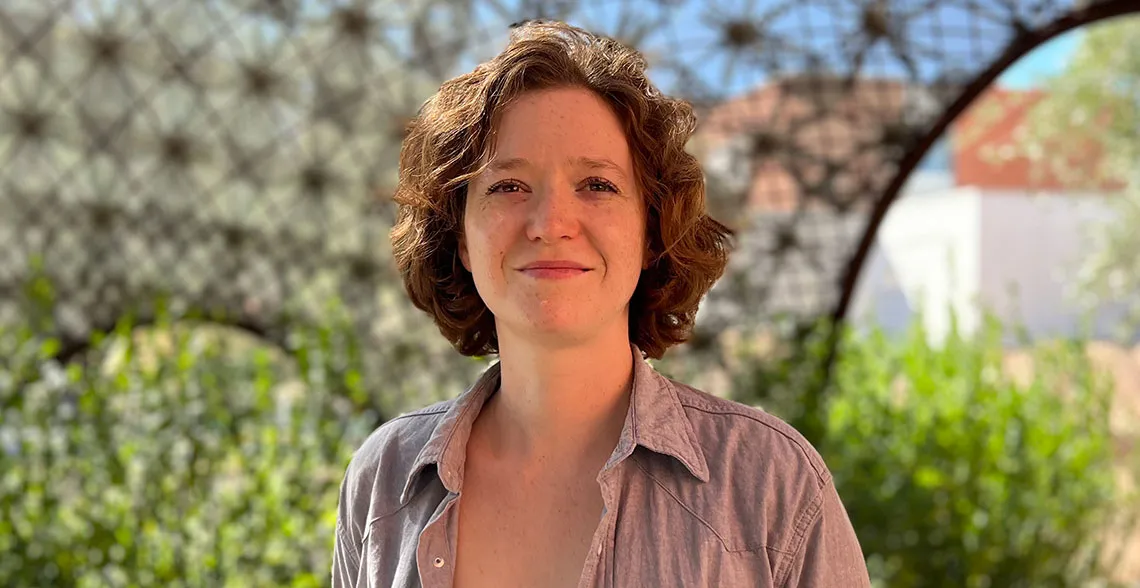
Noémie Despland-Lichtert, a CAPLA Emerging Faculty Fellow and visiting assistant professor of architecture, is a recipient of the Association of Collegiate Schools of Architecture (ACSA) College of Distinguished Professors Travel Grants for Emerging Faculty. She shared her reaction to earning the award and her approach to research and practice.
Q: What does earning this award mean to you?
A: I am grateful and honored. I was presenting two papers this year at ACSA this spring so it is nice to receive support and recognition from the conference organizers. One of my papers explored self-seeded plants as evidence of urban change and spatial politics, My second paper, coauthored with Brendan Sullivan Shea, examined Design Pedagogy in the Desert. Going to ACSA in Vancouver, was the opportunity to present our work as well as to connect with colleagues.
Q: Can you discuss any innovative or unique projects or initiatives you've been involved in as a faculty member?
A: I just completed a small exhibition titled “Books that Matter”, with the support of UofA CAPLA Liaison Librarian Paula Johnson. I selected a collection of recent books about Architecture, Design, and, Justice Equity, Diversity, and Inclusion. I asked Paula to acquire those that were not yet part of the UofA collections and she did. Now they are all available online to students and faculty. The books are displayed with a QR Code to access them in the Sundt Gallery. Jay Nataraja did the graphic design of the display.
Q: How do you bring your research and practice into your teaching?
A: I believe in the integration of teaching and research (including design research, i.e., practice) as a two-way stream. I bring my research and practice to my teaching, but I also encourage students to position themselves as scholars and practitioners. My classes are inspired by ethnic studies principles of students as intellectuals, community engagement and culturally mediated pedagogy. As an educator, I see myself as a mediator: I provide methodology and a critical framework, and then let the students do the rest!
Q: What advice would you give to other early-career faculty members who aspire to excel in academia and contribute meaningfully to the field of architecture?
A: [Laughs] I think I still identify as an early career faculty so I would be talking to a peer. I always think passion and intellectual curiosity are the keys. They keep faculty and students motivated. Academia and Architectural work should feel fascinating, promising, and enjoyable. There is also a lot of work to do on adressing both Architecture and Academia exclusion of minorities and this work is for each and every one of us to do through allyship, advocacy, and continuing education. We have a lot to unlearn and so much to change.


