

Class of 2024 | Fostering Community Growth
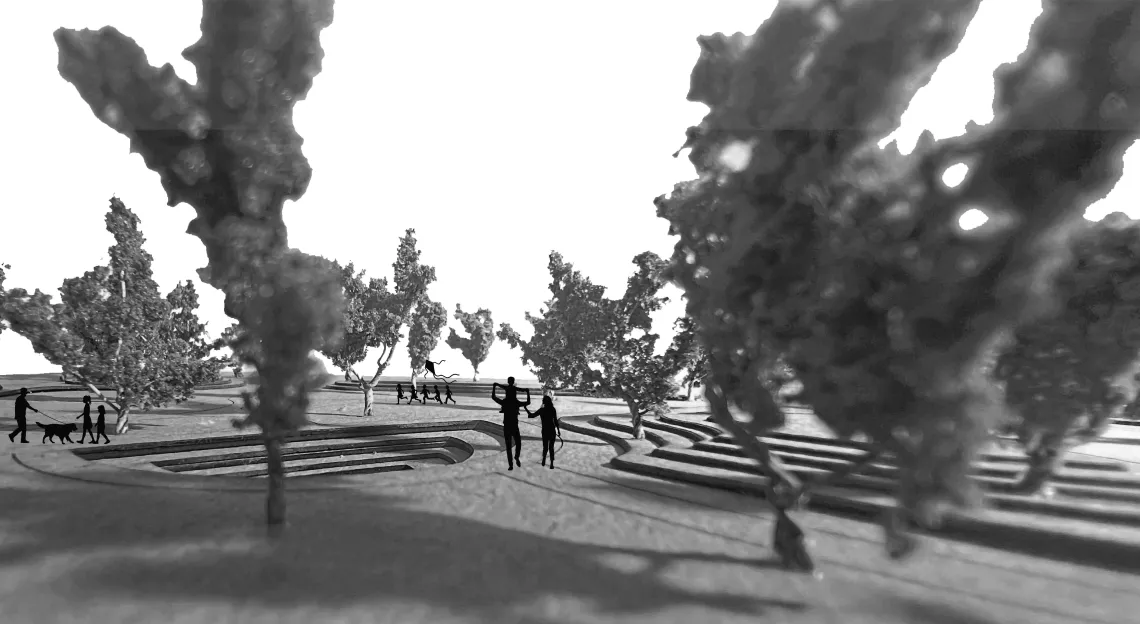
A hand-crafted model showing potential elevation changes throughout a site in Hermosillo, Sonora, Mexico.
“I wanted to choose a program that would allow me to combine my creativity and humanistic approach to create sustainable, aesthetically pleasing outdoor spaces that can positively impact a community.”

Cameron Teamor 24', BLA, reflects on his time as an undergraduate student in the Bachelor of Landscape Architecture program.
Cameron Teamor '24, BLA, came to CAPLA from South Bend, Indiana to pursue the intersection of his passions. He found his perfect fit in the landscape architecture program. Hear what Cameron has to say looking back on his time at CAPLA.
Q: Why did you choose the BLA program?
A: Living near Chicago, I grew up visiting the city’s many parks, museums and public spaces. These experiences introduced me to landscape architecture and urban design and I found it fascinating. I wanted to choose a program that would allow me to combine my creativity and humanistic approach to create sustainable, aesthetically pleasing outdoor spaces that can positively impact a community.
Q: How would you describe your BLA experience?
A: My BLA experience has been great! It has been challenging at times. However, CAPLA has a supportive and collaborative environment that pushes you to develop your skills and put forth your best effort.
Q: What will you always remember from your time as a BLA student?
A: I will always remember the people, my classmates and my professors. They made the experience that much better. Having the opportunity to go to Mexico and work with architecture students from the University of Sonora in Hermosillo on an interdisciplinary studio project was eye-opening and a great experience.
Q: What are your plans after graduation?
A: After graduating, I plan to start working in the landscape architecture division at Halff, a civil engineering company committed to improving communities through good design.
Q: What advice do you have for incoming BLA students?
A: Be confident in your work, but also be open to feedback. Use the tools and resources that are available to you. Ask questions and bounce ideas off of your peers and professors. Stay focused on your goals!
Q: What's a common misconception about landscape architecture?
A: A common misconception about landscape architecture is that it is only related to planting trees and flowers. However, landscape architecture involves creativity, design, drafting and planning, which all come into play when creating functional spaces and minimizing negative impacts on the environment.


