

Clare Robinson and Kelly Eitzen Smith honored with 2025 Darryl B. Dobras Awards
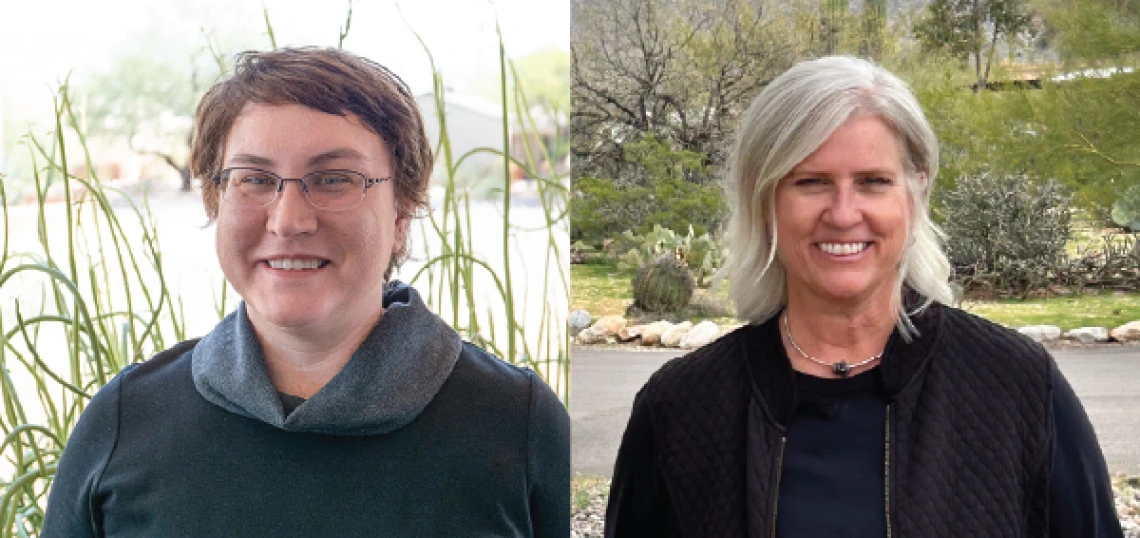
Clare Robinson and Kelly Eitzen Smith have been named the 2025 recipients of the Darryl B. Dobras Awards for Excellence.
Robinson, an associate professor in the School of Architecture, received the faculty award.
She teaches courses in modern architectural history and theory and also serves as the faculty advisor for the master of science in architecture program.
Robinson earned her doctorate in architecture from the University of California, Berkeley, her master’s from the Harvard Graduate School of Design. Her research explores mid-20th-century architecture and planning, especially in educational and memorial contexts.
“I am honored to be recognized for my service to the School of Architecture and CAPLA. The bachelor of architecture program chair is a new position and much of my service has centered on that,” she said. “Carving out what the position entails, and how to lead within a complex institutional setting, has been exhilarating.”
Robinson said she is appreciative of her colleagues who have participated in conversations about how to address the complex social and environmental challenges of the time to propel the curriculum forward.
“Many of the things I do depend upon the contributions of others, large and small,” she said. “I want to be sure that my colleagues know I am thankful they allow me to lead and do the service I do.”
Eitzen Smith, assessment coordinator for the School of Landscape Architecture and Planning, received the staff award.
Her primary role is coordinating all aspects of accreditation for the landscape architecture and urban planning programs.
She also oversees seven-year academic reviews for the master of real estate development program and the bachelor in sustainable built environments program, and manages annual assessment for all of the school’s programs.
“Next year, we will go through our first accreditation of the bachelor of landscape architecture program and re-accreditation of the master of landscape architecture program,” she said.
A University of Arizona alumna, Eitzen Smith holds a Ph.D. in sociology and also supports the Native Peoples Technical Assistance Office. Her research interests include housing affordability, urban issues and community planning.
“I am honored to be recognized for my work,” she said. “The truth is I am very lucky to have a great team to work with (Laura, Holly and Jimmy), and the support of our tremendous faculty and director Lauri Macmillan Johnson. I truly appreciate all of them.”


