
Transforming Urban Access to Natural Areas: Mario Nuño-Whelan '20 MLA
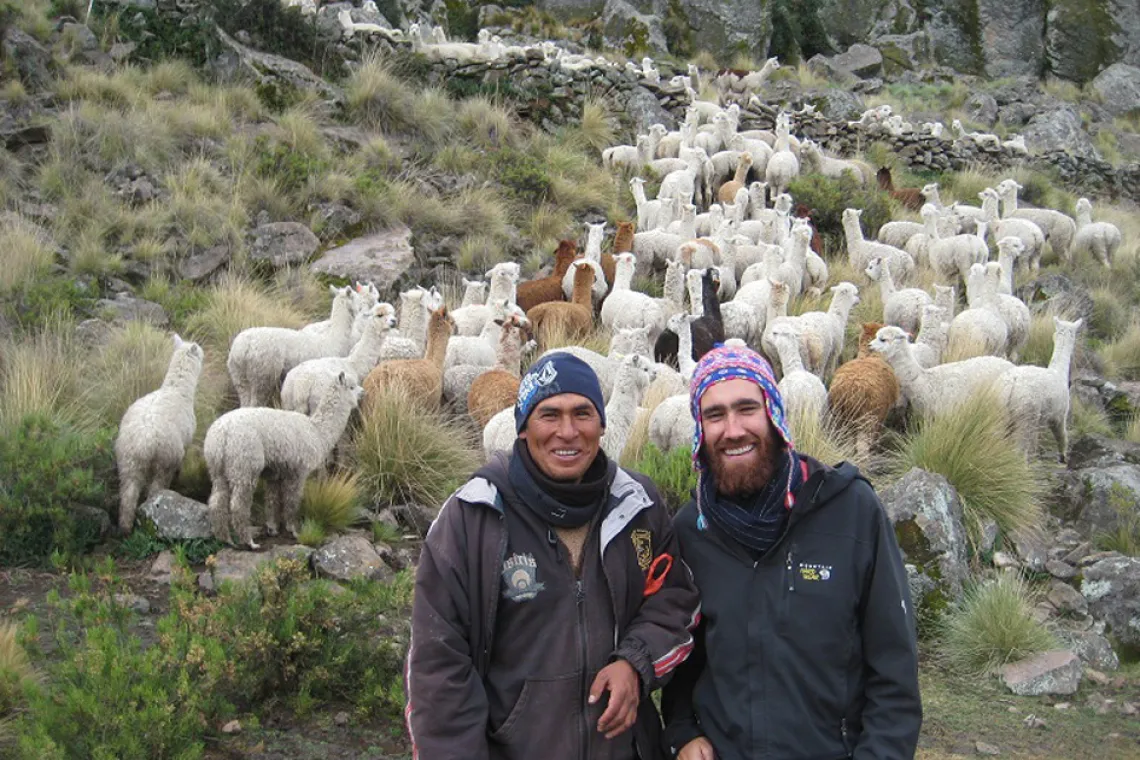
Mario Nuño-Whelan served as a Peace Corps Volunteer in Peru before joining CAPLA's Master of Landscape Architecture program.
The University of Arizona offers the generous Coverdell Fellowships to returned Peace Corps volunteers (RPCVs) who are enrolled in an urban planning graduate program. The Coverdell Program provides tuition assistance and internship opportunities. Coverdell Fellows find a robust Peace Corps community at the University of Arizona and in Tucson, and many are CAPLA alumni.
Where did you serve, and how did the experience lead you to studying landscape architecture at CAPLA?
I spent three years teaching in Peru. For two years, I lived in a remote mountain town of 600 people in the high Andes of southern Peru, called Sibayo. I worked in the schools and I lived with a family that raised dairy cows and alpacas. Daily, I got to see a connection with and reverence for land that was second-nature. My last year, I lived in the megacity of Lima, helping with Peace Corps volunteer coordination and training as well as working in an after-school program in the inner city. Here I saw the equally remarkable, chaotic beauty of extreme urban density.
I came home with an appreciation for how rich cities can be and how little space one actually needs, and also a glimpse of what it looks like to live in an idyllic mountain town, tuned to and in balance with natural systems. This mix sparked a desire to balance the two in our own urban environments.
What kind of work are you undertaking in your current fellowship?
Currently, I work as a Green Infrastructure Design Scholar for Tucson Clean & Beautiful, a local nonprofit whose Neighborhood Scale Stormwater Harvesting program helps neighborhood associations access grants from Tucson Water and the City of Tucson to implement tree planting and stormwater harvesting projects. In addition to project coordination and design work with neighborhood groups, I get to help plant trees. Getting dirty on the weekends is a nice balance to the studio environment.
How does your work help to build a changing world?
As part of my MLA master’s report, I’m helping with the design of a constructed wetland park in the city of Juárez, Chihuahua, Mexico, that uses treated effluent to create wildlife habitat that once existed in the floodplain of a meandering Rio Bravo/Rio Grande prior to channelization. I plan to build from this experience and find work where I can help leverage traditional conservation tactics and funding to transform urban access to wildlife habitat and connected natural areas.


