

Why do roads, runways and railways warp in extreme heat?
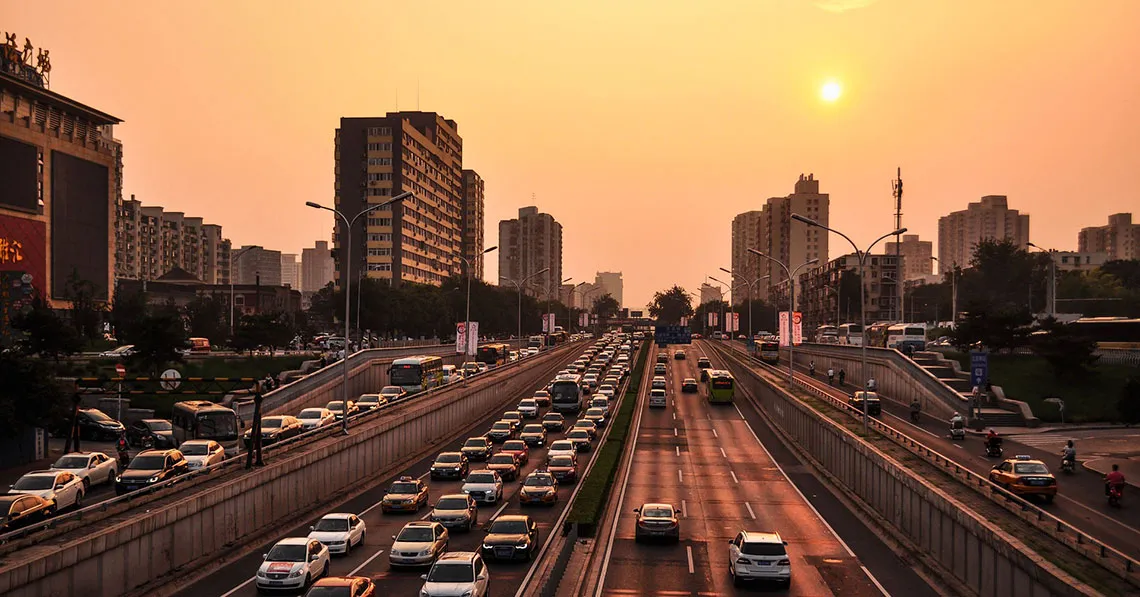
Photo by Erdenebayar Bayansan, courtesy Pixabay.
Buckled roads, warped train tracks and expanded bridges are a stark reminder of the need to adapt our infrastructure to a warming planet. Heat can impact all types of physical infrastructure, but roads, runways and railways may be among the most vulnerable, says Ladd Keith, an assistant professor of planning and sustainable built environments at the University of Arizona’s College of Architecture, Planning and Landscape Architecture.
Keith, an expert on the challenges cities face in dealing with extreme heat—and a proponent for local governance measures to address the growing problem of extreme heat—provided his insight for a July 20, 2022 article in The Washington Post titled “With extreme heat, we can’t build roads and railways as we used to.”
Because physical infrastructure is “traditionally designed based on the historical conditions of a particular location… the point at which extreme heat starts to affect surfaces varies depending on the past climate of that location,” notes the article.
“Any kind of prolonged extreme heat outside of that past climate will push the physical infrastructure into dangerous territory,” says Keith.
One solution, he notes, is to plant trees along roadways to create shade, or to use “cool pavement.”
But, he says, “[w]e need to think longer term and more holistically about heat. We need to make sure that every time that we have a roadway project or a railway project of the future, that we’re making sure to design it for the climate that we’re pushing ourselves into and not the one that we’re currently in or the one that we’ve had in the past.”
Read the full article in The Washington Post.
Keith, who joined CAPLA in 2009, is an interdisciplinary researcher with over a decade of experience planning for climate change with diverse stakeholders in cities across the U.S. His current research explores heat planning and governance with funding from the National Oceanic and Atmospheric Administration, Centers for Disease Control and Prevention and Department of Transportation. In addition to founding and leading CAPLA’s Bachelor of Science in Sustainable Built Environments, Keith teaches public participation and dispute resolution as well as climate action planning.


