Architecture Student Helps Reconstruct Ancient Greek History
Architecture Student Gene King is blending design, history and technology to help digitally reconstruct ancient Greek buildings as part of an international archaeological project.
King, a third-year student, is working under Dr. David Romano in the university’s archaeological mapping lab. She is one of three architecture students collaborating with anthropology researchers to support ongoing excavations at the Sanctuary of Zeus on Mt. Lykaion in Greece.
“I was approached at the start of the fall 2024 semester by Dr. Romano, the director of the archeological mapping lab, who asked if I would be interested,” King said. “I have always been fascinated by anthropology and the various intersections with the field of architecture.”
The Mt. Lykaion site, located in the Peloponnesian region of Arcadia, has been excavated systematically since 1996 and is now sponsored by the University of Arizona and the Greek Archaeological Service.
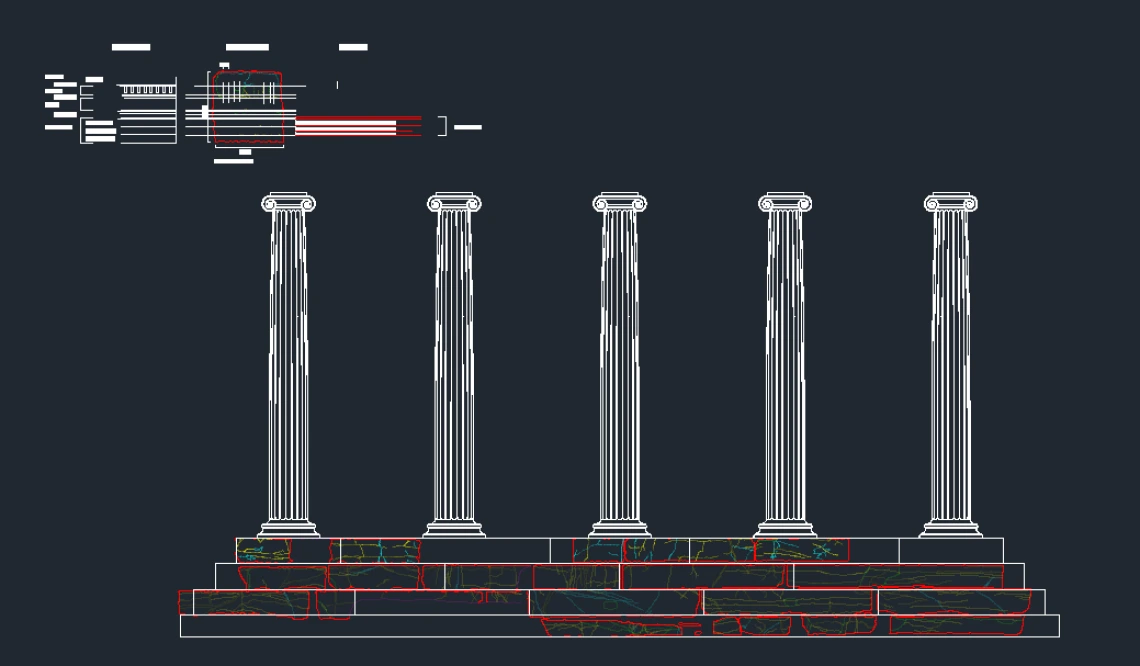
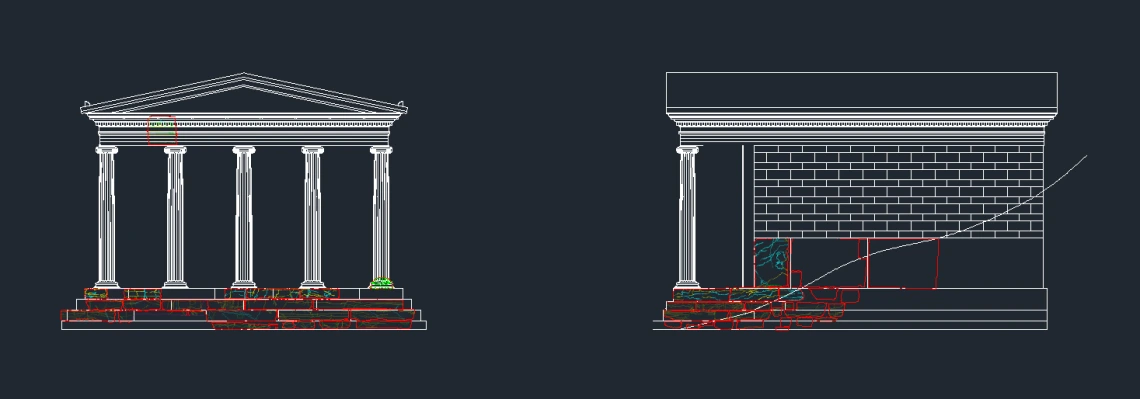
King’s role involves hand-drawing architectural blocks found on site, digitizing them using software like AutoCAD and reconstructing full structures using historical texts and classical design knowledge.
“My task this semester has been to digitally reconstruct one of the ancient ruins on the site using drawings of architecturally significant blocks found at the site as well as my knowledge of classical proportions and similar temples built around the same time period,” she said.
She typically spends about seven hours a week in the lab, dividing her time between research and digital modeling.
“My day usually starts with extensive research, whether that’s reading portions of Vitruvius’s “Ten Books on Architecture” or sifting through various publications relating to ancient Greek architecture,” she said. “Then, I usually pick up where I left off with the digital reconstruction.”
Challenges are frequent, particularly due to missing or damaged materials.
“Due to erosion, weathering, looting, etc., I have had to work with what we have,” King said. “That’s when I resort to deciphering what the original architects of this building might have done given various factors.”
King combines classical research with modern software like AutoCAD, Rhino and Adobe Illustrator, along with traditional hand drawing.
“Many architecture programs don’t teach those skills anymore in the wake of recent technological advances,” she said.
The experience has reshaped how she views modern design.
“Learning about ancient architecture in a more hands-on environment and studying classical
proportions has been extremely applicable to my own designs and how I think about modern architecture,” King said. “The use of modules and parametric thinking are at the heart of classical architecture but are also the principles which drive modern design.”
One of her favorite discoveries is a rare Ionic temple with just five columns.
“I’m fascinated to hopefully uncover exactly why the original architects chose to use only five columns,” she said. “There are so many questions left unanswered, which is what keeps me intrigued.”
Looking ahead, King hopes to keep exploring the intersection between ancient and modern design.
“I hope to continue my interdisciplinary studies and continue studying the ancient past in my journey towards the future,” she said.
More about the project can be found at lykaionexcavation.org.
Ancient Greek Ruins