

New Student Chapter Builds Community, Awareness around Indigenous Design
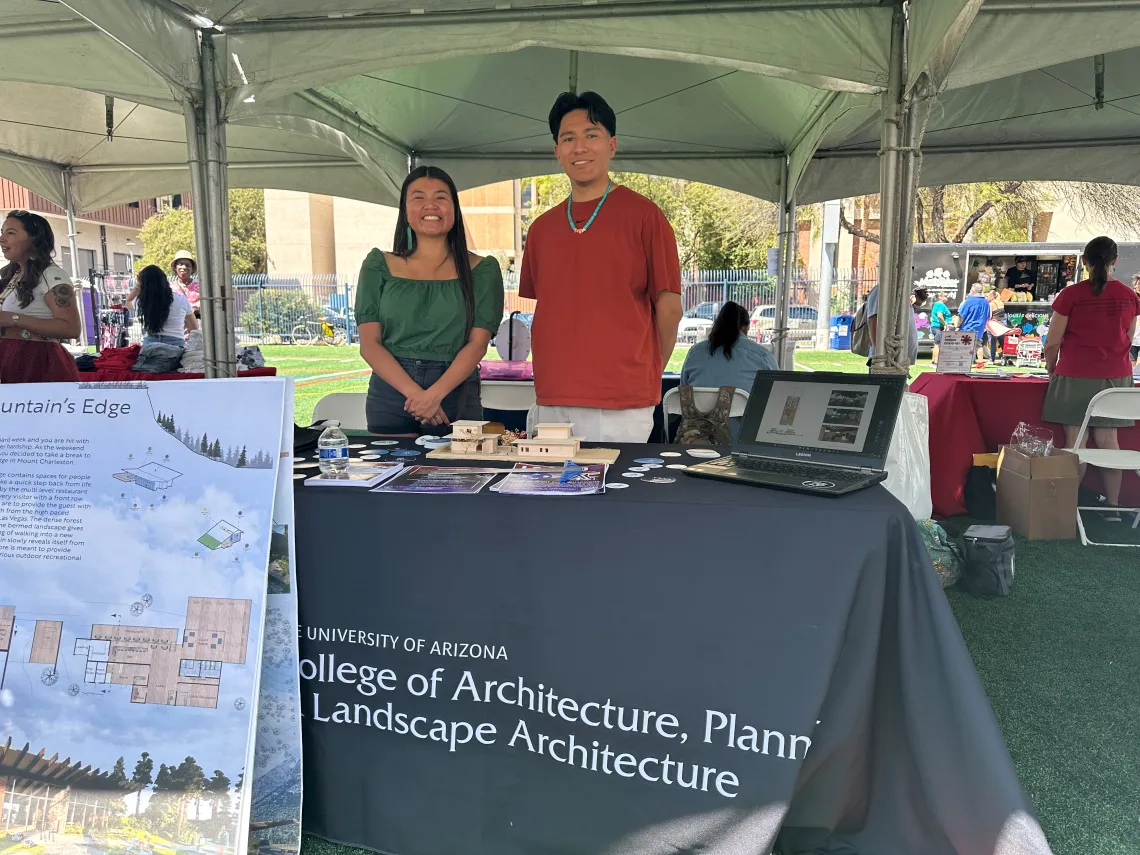
From left, Robyn Nelson, BArch '24 and Nathan Becenti, MArch '25 promoted the new CAPLA student chapter of the Indigenous Society of Architects, Planners and Designers during UArizona's first Pow Wow since 2014.
Two students have established a new student chapter of the Indigenous Society of Architecture, Planning, and Design at CAPLA.
Nathan Becenti, M.Arch '25 and Robyn Nelson '24, B.Arch promoted the new student chapter at the UArizona's 2024 Spring Social Pow Wow in April. The purpose of the university Pow Wow was to gather local Native American and non-Native American community members together for a celebration of Native American cultural dancing, singing, artistry, health, wellness, and prayer. It is an important cultural event that reinforces cultural traditions and highlights the many different backgrounds of our Native American student population at the university.
There are approximately 150 different tribal communities represented on our campus and over 570 federally recognized tribal communities in the U.S.
Nathan shared more about the goals behind the new student organization and how it plans to build community, develop meaning behind indigenous architecture and raise awareness and appreciation for indigenous design.
Q: What was the motivation behind establishing this student organization?
A: Growing up on the reservation there weren't many opportunities to explore architecture. When going into school for architecture it seemed as though there weren't many natives. We started this chapter to build an indigenous community within CAPLA. We want to have this community help develop a meaning behind indigenous architecture and raise awareness and appreciation for indigenous design; while also giving opportunities to explore the professional field.
Q: What do you hope this student organization will accomplish?
A: With this student organization we would like to provide support to our members. We would do this within the school with events such as student socials to provide a metal brake for our members, but also start mentorships and workshops to help provide information to the first and second years who may not understand topics/programs just yet. When it comes to outside of school, we would have interaction with the processional world of architecture to provide opportunities for our members to network with architects. We would also like to have various indigenous architects give lectures about indigenous design, to provide our members with knowledge and ideas on indigenous design. We also want to table at various indigenous events in town and on local reservations to expose the youth to the potential path they can take in architecture.
Q: How do you see this student organization supporting the professional ambitions of its members?
A: We will provide opportunities for our members to network and learn from the professional field. We would do this with a series of local firm tours to provide our members with a better understanding of the profession, while also giving opportunities to network with architects. We would also like to host workshops for resumes and design portfolios. By implementing these events our members would be more comfortable and ready to start their journey in the professional world.
Q: What opportunities for networking will this student organization make available?
A: In the fall, we will have firm tours for our members to get more familiar with offices around town, but also exposing the offices to new faces which would help later on in interviews. Coffee with an architect events for our members to ask architects about the professional field. We would also have events for our members within the school to build an indigenous community at CAPLA. This chapter is a part of a national network which holds conferences. Our goal is to have our chapter represented at these conferences which hosts lectures and social events specifically for indigenous design.


