

Architecture and Planning Faculty Quoted in Salt Lake Tribune Article on 'Water Shaming'

Courtney Crosson, assistant professor of architecture, and Ladd Keith, assistant professor of planning and sustainable built environments, were quoted in the Salt Lake Tribune's July 12, 2021 story, "Neighbor wasting water? Is 'water shaming' the answer?"
The story, a part of the Tribune's "ongoing commitment to identify solutions to Utah's biggest challenges through the work of the Innovation Lab," provides a bit of "water shaming" history, beginning with Brigham Young. Today, Utah’s Hall of Fame or Shame provides an avenue for Utah neighbors to submit concerns (or kudos) about neighbors who are overusing water in this drought-stricken time.
"Last year’s drought season was characterized as the worst in two decades," says the article. "During that entire year, 167 complaints were filed with the Hall of Fame or Shame. By comparison, halfway through 2021 the website has seen 5,540 complaints, a 3,200% spike from the past year. Of all complaints in the website’s four-year history, 68% were filed in 2021." And over 98% of submissions are complaints.
In speaking to drought shaming in California, which in one recent case contributed to a reduction of Los Angeles water use by 26%, Crosson says in the article, "I know that there’s been plenty of research done that has proven it to be effective. But once you get rain, people forget about it. So I think the endurance of these kinds of approaches is really important. It’s not just ‘oh, we’re in a drought’ fixes that will stop it. I think we have a fundamental shift we have to make as a society, and I think it’s going to take a lot of different things."
"[I]n one way, water shaming may be an excuse to put the blame on individuals instead of actually taking larger policy actions at the state or even city level," adds Keith.
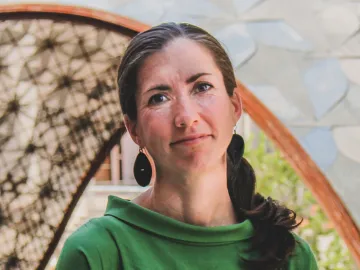
Crosson, who joined CAPLA in 2016, researches decentralized water systems to address pressing problems facing cities—whether water scarcity in the U.S. Southwest or safe and affordable water access in informal settlements in Nairobi, Kenya. She also teaches courses on water in the built environment and community outreach studios. These studios, funded by the city, county or private practice, tackle critical issues in urban sustainability. Crosson, who is the Master of Science in Architecture faculty advisor in the program's Urban Design Concentration, holds a Master of Architecture from Yale University.
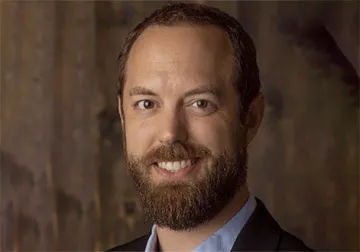
Ladd Keith, University of Arizona Associate Professor of Planning and Sustainable Built Environments.
Keith, who joined CAPLA in 2009, is an interdisciplinary researcher working at the intersection of urban planning and climate change to create more sustainable and resilient cities. He has over a decade of experience working with diverse stakeholders to solve complex urban challenges in cities across the U.S. His current research explores urban heat governance and how cities can increase heat resilience through the mitigation and management of heat. In addition to founding and leading CAPLA’s Bachelor of Science in Sustainable Built Environments, Keith teaches public participation and dispute resolution and climate action planning.
Header photo by Daniel Borker, courtesy Pixabay.


