

A Thriving Tucson Area Depends on a Secure Water Future
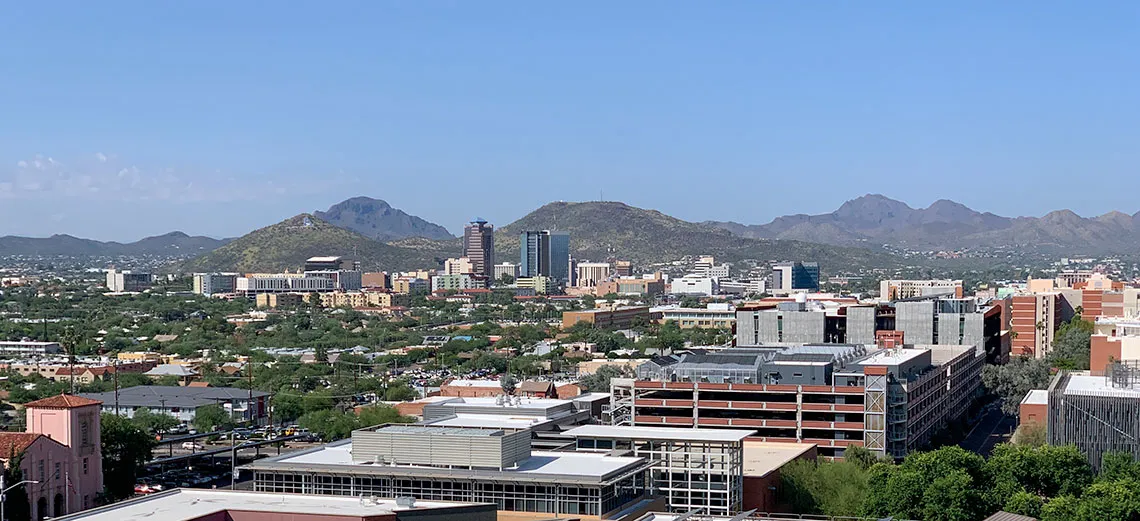
“We are members of the Tucson community writing to remind readers that a thriving Tucson area depends on a secure water future,” say Watershed Management Group’s Catlow Shipek, Tucson Artisan Builders’ Dante Archangeli and Courtney Crosson, assistant professor of architecture at the University of Arizona’s College of Architecture, Planning and Landscape Architecture, to begin their October 17, 2021 editorial in the Arizona Daily Star, “Let’s choose a path toward local water sustainability.”
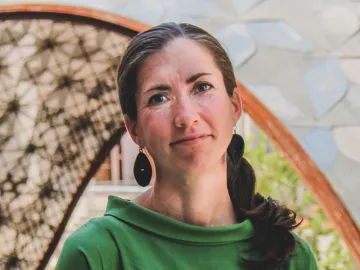
Assistant Professor of Architecture Courtney Crosson.
At the heart of the writers’ concern is a single question: “Can we build our way out of our water crisis?” Their answer: Yes, tentatively—but only if “our construction designs for both existing and proposed development solve problems instead of causing them.”
Currently, even though Southern Arizona faces water supply shortages, local governments “continue to issue new permits for residential development and water service” while calls for water conversation are “met in some circles with skepticism as to why we should conserve water if it only benefits more development and increases our risk of a local water shortage,” they write.
The editorial lays out the necessary broad steps to ensure a sustainable water future for the region, including retrofitting existing designs, planting native rain gardens, water harvesting, modifying water use patterns indoors, reusing water for irrigation, designing new developments to use less water and other measures.
Crosson, who joined CAPLA in 2016, is an assistant professor and licensed architect. At UArizona she teaches classes on water in the built environment and community outreach studios. These studios, funded by the city, county or private practice, tackle critical issues in urban sustainability. Through exhibitions, books, presentations, workshops and even board games, the design work seeks to go beyond the studio and engage citizens and governments in solutions for their cities. Several of the designs produced in her studios have received public funding to be constructed. Her current research advances decentralized water systems to address pressing problems facing cities—whether water scarcity in the U.S. Southwest or safe and affordable water access in informal settlements in Nairobi, Kenya. Her work has been published in peer-reviewed journals in architecture, engineering and planning. Crosson holds a Master of Architecture from Yale University and a BA in Art History from Duke University.


