
Sustainable Built Environments Professor Ladd Keith Provides Insight for CBS Story on Tucson’s Climate Action Goal
Feb. 24, 2022
Who
Ladd Keith, Assistant Professor of Urban Planning and Sustainable Built Environments
What
Quoted in Tucson CBS Affiliate KOLD-TV
When
February 17, 2022
Image
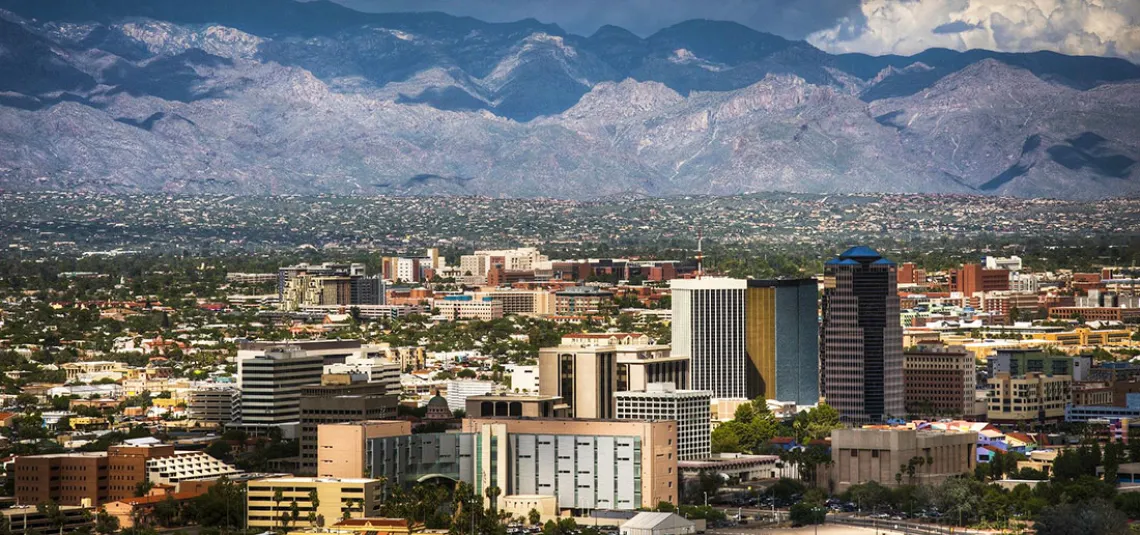
Downtown Tucson

Photo by Celtenator, courtesy Pixabay.

Ladd Keith, assistant professor of planning and sustainable built environments at the University of Arizona’s College of Architecture, Planning and Landscape Architecture, was quoted in a February 17, 2022 KOLD-TV story on Tucson’s goals to become carbon neutral by 2030.
Image
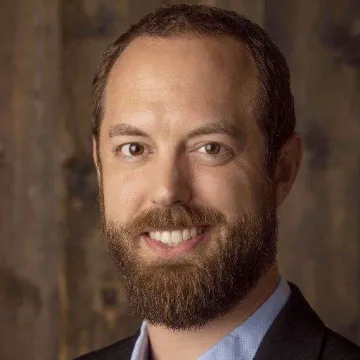
Ladd Keith

Ladd Keith, Assistant Professor of Planning and Sustainable Built Environments

The story mentions high-level options for the city’s goal, such as electric vehicle use and charging stations, noting that a recent city survey shows that 71% of Tucsonans “strongly support investing in electric vehicle infrastructure and electric vehicles becoming more widely used.”

“We need to make sure the most vulnerable in our community are taken care of when we address climate change but also, we’re an innovative community and we have a thriving economy,” says Keith in the article. “We can do both of those things at the same time but need to make sure everyone is at the table.”

Keith, who joined CAPLA in 2009, is an interdisciplinary researcher working at the intersection of urban planning and climate change to create more sustainable and resilient cities. He has over a decade of experience working with diverse stakeholders to solve complex urban challenges in cities across the U.S. His current research explores urban heat governance and how cities can increase heat resilience through the mitigation and management of heat. In addition to founding and leading CAPLA’s Bachelor of Science in Sustainable Built Environments, Keith teaches public participation and dispute resolution as well as climate action planning.


Subscribe to The Studio

Sign up for CAPLA's monthly e-newsletter to get the latest news and events, insights from faculty and leadership, profiles of students and alumni and more.

Subscribe Now

Latest CAPLA News, Projects and Profiles

Image
Group photo of four CAPLA students who are members of the ISAPD

CAPLA to host Indigenous Design Symposium focused on community, sustainability

CAPLA’s Indigenous Society of Architecture, Planning and Design (ISAPD) will host an all-day symposium on April 6, bringing together students, faculty and practitioners to explore Indigenous approaches to the built environment. Featuring Indigenous designers and supported by campus partners, the event will highlight community-centered design, sustainability and the role of Indigenous knowledge systems in shaping more responsible relationships with land.

Image
Six students and faculty work together to lift the frame of a wall for a house they are building in Agua Prieta

CAPLA students build housing in Agua Prieta during spring break

CAPLA students spent spring break in Agua Prieta, Sonora, building a home for a local family in partnership with Rancho Feliz. Working alongside community members, they gained hands-on construction experience while contributing to a reciprocal housing program designed to address affordability and climate-responsive design.

Image
Jackie Hogan Headshot

Research-Based Approach to Architecture: Jackie Hogan M.Arch + MS.Arch ‘25

Jackie Hogan (’25 M.Arch + MS.Arch) is a dual-degree graduate of CAPLA whose work bridges architectural practice and research-driven design. Drawn to architectural history, theory and ethics, she pursued the M.Arch + MS.Arch dual degree to explore how research can shape meaningful design decisions. During her time at CAPLA, she engaged in community-centered design through Laura Carr’s studio working with the Tuba City community and completed a thesis examining architecture’s role in disaster relief and climate-related emergencies. Now working at Line + Space, Hogan brings an evidence-based approach to projects, applying research to create thoughtful spaces that connect people, culture and the environment.