

MS.Arch Grad’s Research Award Signals Bright Future
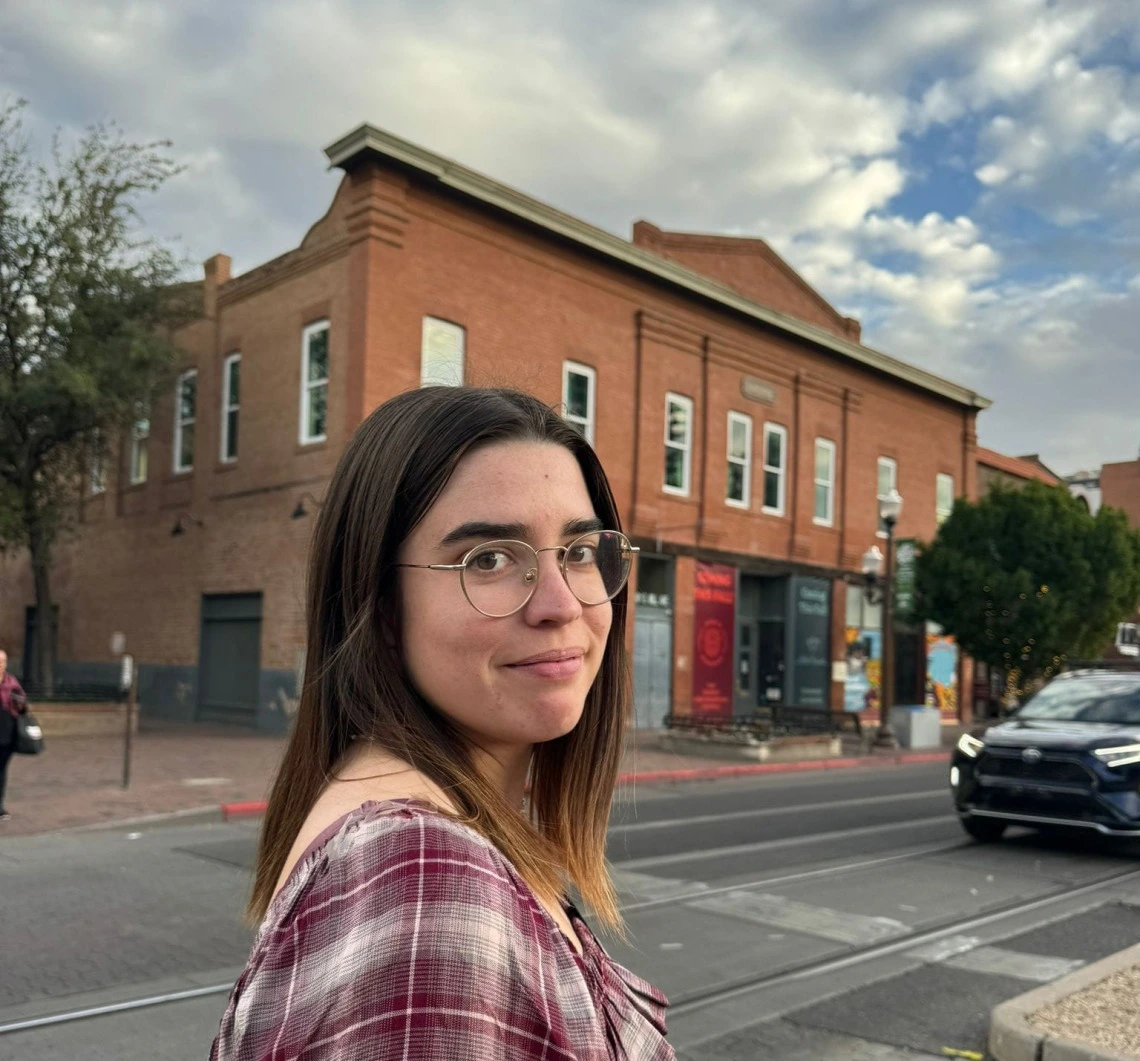
Montse Estrany Bover graduates in May 2025 with her Master of Science in Architecture.
As Montse Estrany Bover embarks on the next chapter of her professional journey, she carries with her not only a Master of Science in Architecture from CAPLA, but also a research award from the Council of Educators in Landscape Architecture (CELA).
Bover earned the award for research on the historic agricultural landscapes of Catalunya, her home region in northeastern Spain. Her project, based on her master’s thesis, traces the evolution of these landscapes and explores how to conserve them in the face of modern decline. View her thesis, "From Functional Architecture to Cultural Heritage: Unveiling the Significance, Evolution, and Present Challenges of the Catalan Masia."
“I did a historic analysis to describe the evolution of these types of landscapes throughout the decades,” Bover said. “I wanted to find out the elements that influence their current decline and how to improve the conservation of traditional and vernacular landscapes.”

Can Cabot is an unused Masia, a traditional type of construction used for agricultural purposes in the early 10th century in the northern Mediterranean side of Spain. Bover traces the evolution of these structures and her research findings target improvements in local heritage conservation policies and procedures.
Montse Estrany Bover
For Bover, the recognition from CELA was not only an honor, but also a turning point in her academic identity.
“Winning this award has given me a confidence boost in research,” she said. “It was my first time working on this type of project after focusing only on design throughout my undergraduate studies.”
After completing her courses in December, Bover returned to Spain and is currently working for an architecture firm, but she has long-term plans to return to academia.
“I have plans to pursue a Ph.D. in the future and mix research and practice throughout my career,” she said.
Her time at CAPLA was transformative, revealing new pathways in the field of architecture.
“The program specifically taught me that architecture is not only about designing buildings,” she said. “There are so many fields that can be researched within the architecture framework.”
Bover also immersed herself in campus life as a CAPLA ambassador and international student, taking in the full experience — from long studio hours to football games and celebrating her first Thanksgiving.
“There were so many new experiences and activities to discover,” she said.
She credits her thesis advisor, Clare Robinson, and academic advisor, Gretchen Luhr, as critical mentors in her journey.
“Clare pushed me to do my best on my thesis and motivated me to participate in conferences and award ceremonies,” Bover said. “Gretchen was the one person I could always talk to whenever I needed a confidence boost — and she never failed to provide one.”


