

Sustainable Built Environments Capstone Showcase
Students wrap up their studies in the SBE program by presenting independent research on a variety of sustainability related topics.
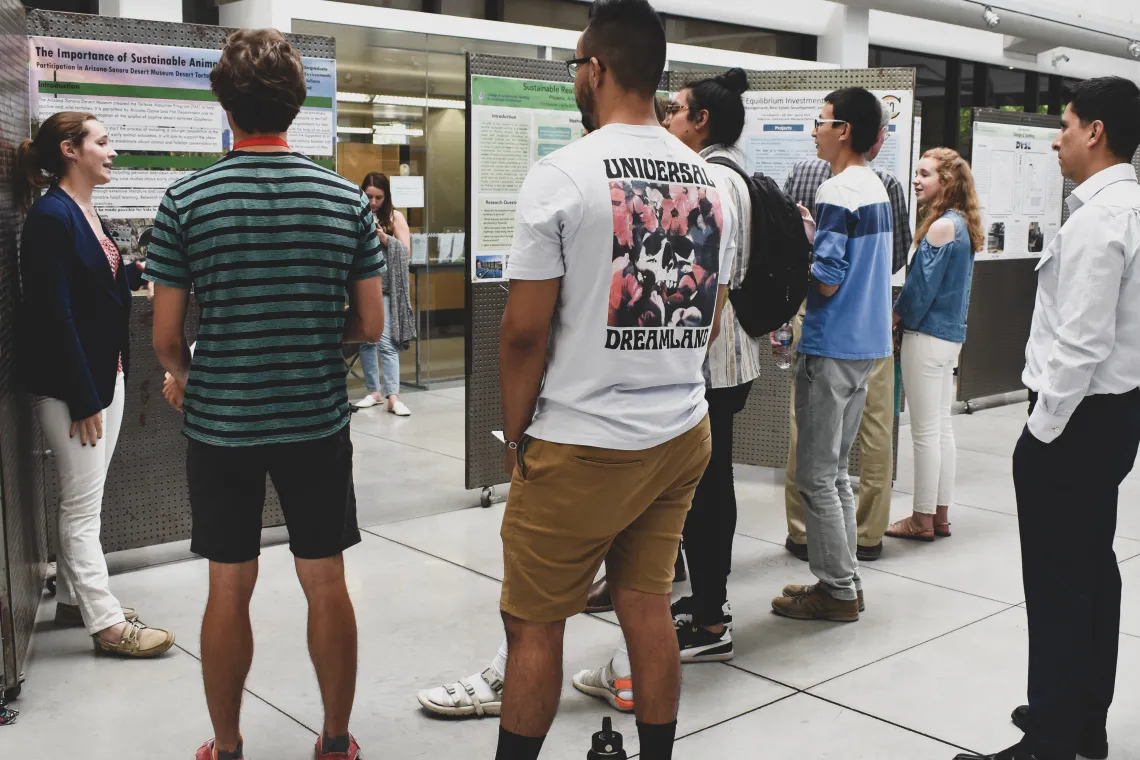
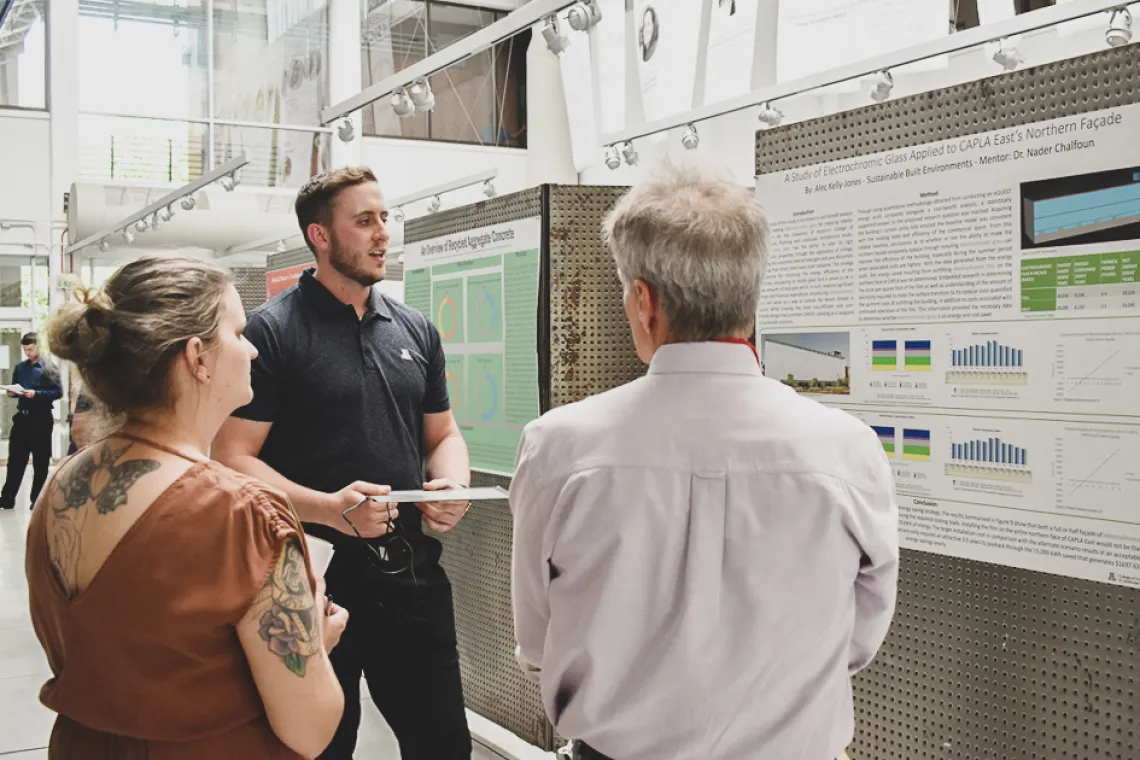
Bachelor of Science in Sustainable Built Environments (SBE) students presented their capstone projects in a juried poster session in the Sundt Gallery at the end of the spring semester. Their research spanned a wide range of sustainability-related topics, including technological innovations, sustainable real estate development best practices, and the importance of sustainable animal education at the Arizona-Sonora Desert Museum.
After viewing the project posters and hearing the students' presentations, project judges Rachelle Hornby, Steven Herzog, Philip Stoker, and Traci Lenon selected two students as the winners of the showcase for their outstanding research.
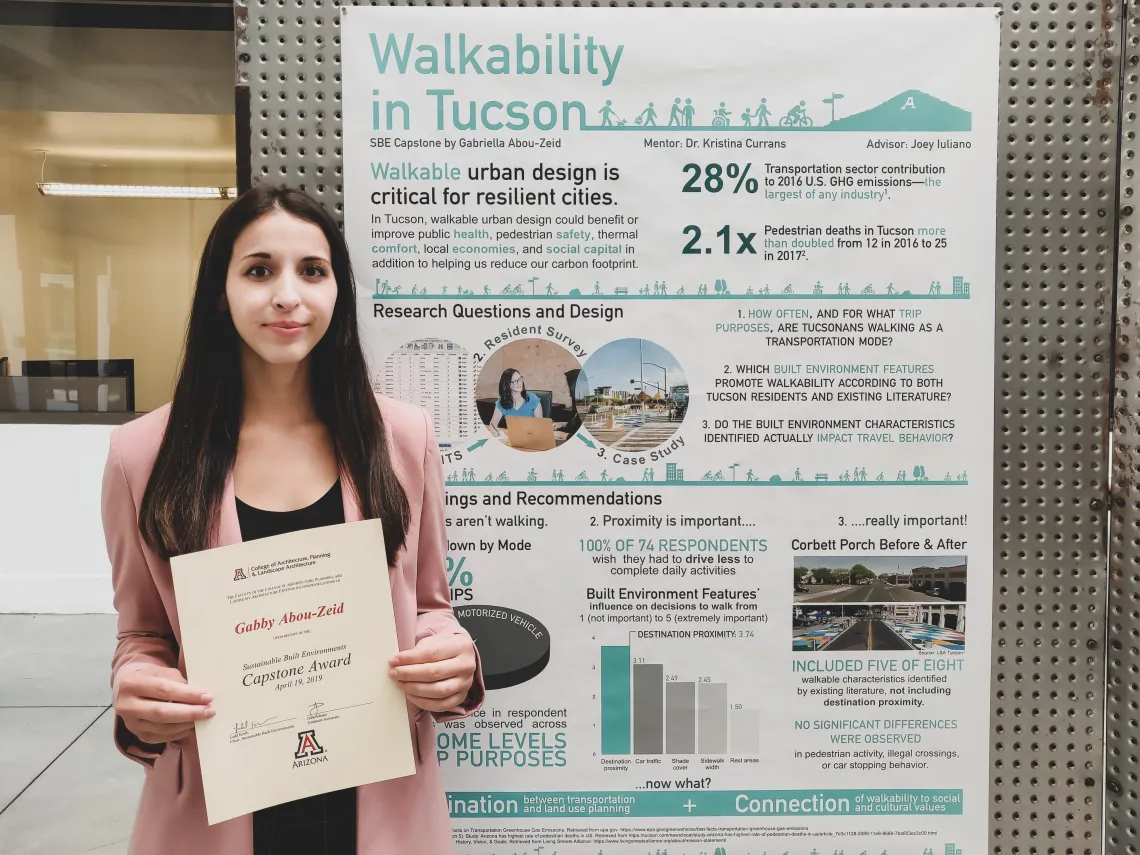
For her winning project, Walkability in Tucson: An Overview of Current Trends and Growth Potential, Gabriella Abou-Zeid analyzed current walking trends in Tucson and proposed some solutions for promoting and supporting walking as a viable means of transportation in the city. Abou-Zeid conducted an assessment of existing data to determine the percentage of trips that were taken on foot versus other modes of travel (i.e. car, bicycle, public transportation), gathered additional data through a survey on residential preferences for walking, and conducted a built environment case study analysis. Based on her findings, she recommended coordination between transportation and land-use planners, encouraging them to consider the needs of various demographic groups in future efforts to increase walking as a way to get around the city.
Iman Monshizadeh received an SBE Capstone Award for his project, The Impacts of Energy Efficient Window Retrofits. Using energy modeling software, Monshizadeh simulated the effects that different types of window upgrades had on the energy consumption of an average-sized model home. He then used the software to generate reports that showed the benefits and costs associated with different types of window retrofits.
The capstone projects in the SBE Showcase cover a diverse range of research topics. Students choose from one of the following emphasis areas for their capstone projects: sustainable buildings, sustainable communities, sustainable landscapes, sustainable real estate development and heritage conservation. The degree is a hands-on degree focused on preparing students for success in a variety of environmental fields by equipping them with the skills needed to make our communities, buildings, and landscapes more sustainable.


