


Mission Garden, Food, Culture, History | Lecture by Alyce Sadongei and Efren Martinez
This presentation explores the Tucson Mission Garden's history and the agricultural traditions of the many cultures that have farmed this land over time, and introduces the garden’s newer plots. Sadongei and Martinez discuss the challenges of growing food as Tucson’s seasons become hotter and drier, offering lessons that connect history, culture, and the future of sustainable food systems in the desert Southwest.

CAPLA students share Indigenous perspectives in Archtober presentation
“ISAPD in Our Hands: Student Chapters Shaping the Future” explored how student chapters of the Indigenous Society of Architecture, Planning, and Design (ISAPD) can foster learning, cultural engagement, advocacy and professional growth within universities and their communities.
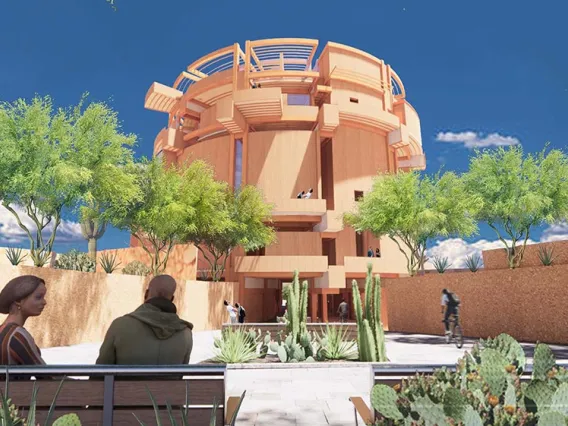
Root Down: Maggie Collopy '23 B.Arch
Maggie Collopy's Root Down is a mixed-used building that accommodates institutional, educational, commercial and public uses. Located in the multicultural heart of Tucson, the project serves as a beacon for public integration and educational exposition, and an example of how buildings can be sustainable.
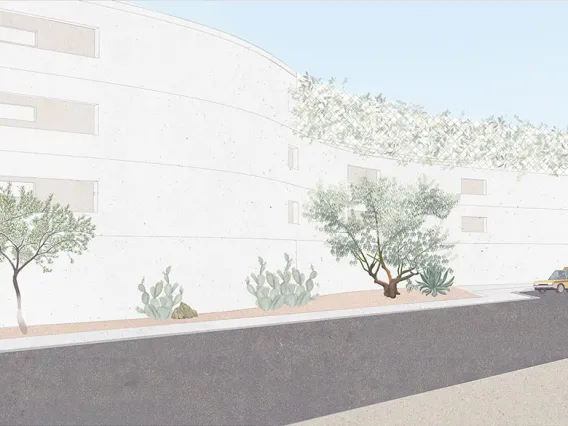
Housing Project for Domestic Violence Survivors: Kathy Le '24 M.Arch
Kathy Le's Housing Project for Domestic Violence Survivors is a community designed for women and children victims of domestic violence. Le's main goals were to address and resolve issues with security, comfort and community, seeking not just to provide shelter but also to provide nurturing.

Cities are Heating Up—Here's How Urban Planners Should Prepare
As heat waves blaze across the United States, CAPLA's Ladd Keith, assistant professor of planning and sustainable built environments, says city planners should take the lead in managing and mitigating extreme heat. Read this Q&A to learn more.
Damon Leverett and Jeff Guba Win 2022 Darryl D. Dobras Awards for Excellence
Senior Lecturer in Architecture Damon Leverett and Senior Data and Financial Analyst Jeff Guba have been awarded CAPLA’s highest annual honor for employees: the Darryl D. Dobras Award for Excellence, awarded by Dean Nancy Pollock-Ellwand.
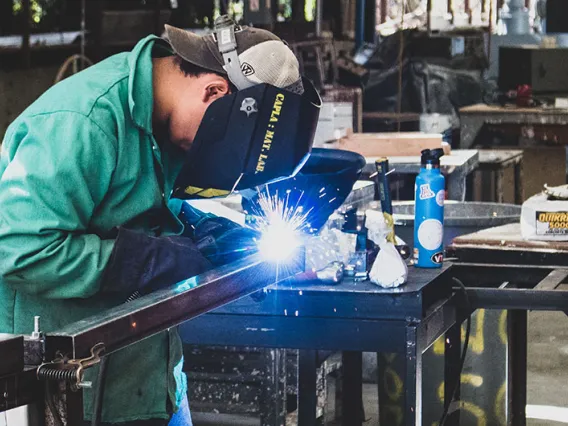
CAPLA Launches Interdisciplinary Bachelor of Arts in Design Arts and Practices with Emphasis Areas in Object and Space
CAPLA's School of Architecture has partnered with the School of Art and School of Information to offer a new, transdisciplinary undergraduate degree: the Bachelor of Arts in Design Arts and Practices. CAPLA coordinates two of the degree's four emphasis areas: Object Design and Spatial Design.
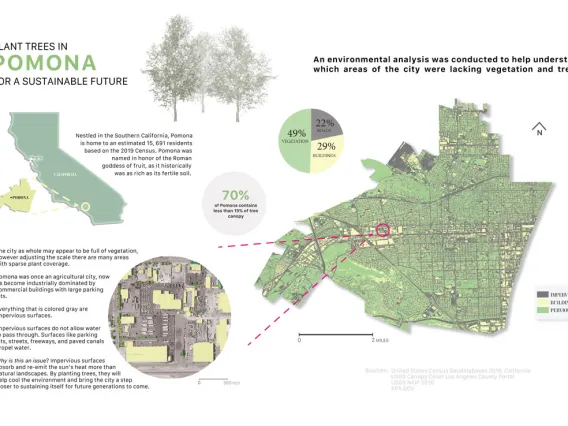
Award-Winning Student Map Aims to Help Southern California City Plant a Sustainable Future
Recent Master of Landscape Architecture student Irene Pineda has won first place in the graduate/professional student category of the UArizona 2022 Data Visualization Challenge for her map Plant Trees in Pomona for a Sustainable Future. Her map identifies where trees should be planted to provide more shading in the rapidly industrializing Southern California city.
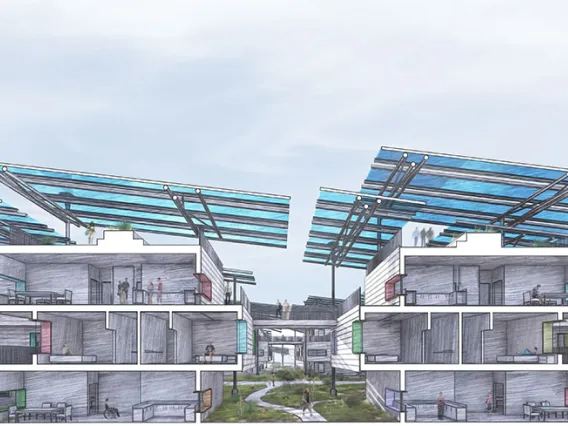
UArizona Architecture Students Win 2022 U.S. Department of Energy Solar Decathlon Design Challenge Grand Prize
Professor Jonathan Bean and the Solar Decathlon Design Challenge Multifamily Building team of fourth-year B.Arch students Andrew Norris, Jonah Cummins-Mikkalson, Alex Kolodziej and Nhan Vo not only took first place in their division, but also was selected as the 2022 Design Challenge Grand Winner for Commercial Divisions—a first for CAPLA and UArizona.

Sustainable Influence: Shamara Smith '22 BS SBE
BS in Sustainable Built Environments student Shamara Smith came to UArizona from Pittsburgh, Pennsylvania. In this video profile, she discusses how she became interested in sustainability, her passions for leaving the world better than she found it, why community engagement is important and the value of networking in building a new career.

Student and Faculty Research Leads to ‘Most Endangered Historic Places’ Designation for Buffalo Soldier Camp
Thanks to research by CAPLA's Heritage Conservation Project Director Helen Erickson and graduate students Sarah McDowell and Teresa DeKoker, the Buffalo Soldier military establishment Camp Naco in Southeastern Arizona has been listed by the U.S. National Trust for Historic Preservation's as one of America's 11 Most Endangered Historic Places for 2022.