

New CAPLA Dual Degree Program Connects Architecture and Urban Planning
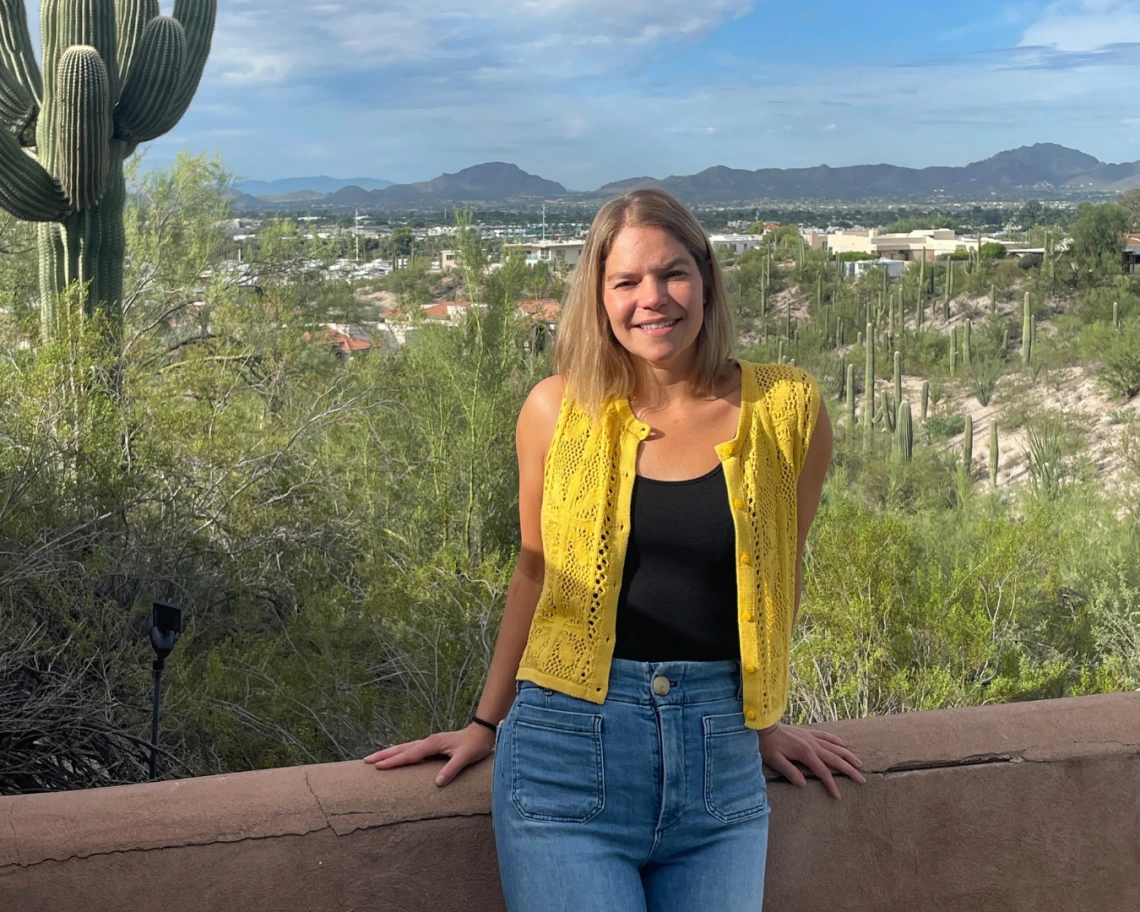
Sarena Rabinowitz, ‘27, is among the first students pursuing CAPLA’s new dual-degree Master of Science in Architecture (MS.Arch) and Master of Science in Urban Planning (MSUP).
The new dual degree gives students the opportunity to complete both degrees with an additional 12 months of school, bringing together professional planning education and architectural research.
“Without much more time, a student can augment their professional planning education with a research degree to improve their marketability and knowledge in data analytics for the built environment,” Kristi Currans, chair of the MSUP program, said.
For Rabinowitz, the path to CAPLA began long before she enrolled in the dual-degree program. After earning her Bachelor of Architecture from Pratt Institute in Brooklyn, she spent more than a decade living and working in New York before moving to Tucson.
“One of my first jobs after finishing my degree was at the NYC Department of City Planning, and that experience stuck with me,” Rabinowitz said. “I knew even then I wanted to go deeper into planning eventually.”
The dual degree brings together two programs with different approaches to understanding the built environment.
“The MSUP is a professional degree in planning,” Currans said. “It presents students with the skills and knowledge of policy, governance and physical urban design for cities and our futures.”
The MS.Arch program adds a research component that allows students to investigate specific social and environmental questions through individual thesis work. Rabinowitz said that research emphasis has influenced the way she approaches her own design work.
“It’s pushed me toward a more rigorous, evidence-based design process, one that starts with good questions instead of quick answers,” she said.
The programs also give students experience working both independently and collaboratively, including opportunities to work with community partners through the MSUP program.
“To complement the MS.Arch independent graduate thesis, the culmination of the MSUP program is a group-based project grounded in real-world programs in collaboration with local community partners, allowing students opportunities to develop both individual and group lines of inquiry and skills,” Currans said.
For Rabinowitz, community engagement has become an especially important part of this interdisciplinary approach.
“Courses like Public Participation have given me tools to ground design work in real community input rather than assumptions about what a community needs,” she said.
Currans said the dual degree is intended for students who want to expand their research abilities while developing a broader understanding of planning and the forces that shape cities.
“For students interested in working for planning entities, having greater exposure in research and architecture knowledge will improve your ability to work with local design and development firms through a greater understanding of pragmatic issues and innovations,” Currans said.
Rabinowitz hopes to put that combination of skills to work in Tucson after graduation.
“Ultimately, I want to work on community-centered projects here in Tucson,” she said. “Work that comes out of a public process rather than being handed down to a community after the fact.”
She also sees teaching as a possible part of her future, with the goal of sharing what she learns with students who follow.
“Longer term, I’d also love to bring teaching into the mix,” she said. “Whether that’s studio instruction or something that lets me pass on what I’m learning about merging planning and design to the next group of students coming through a program like this one.”
For Currans, the broader goal of the new degree is to help students move between disciplines and scales as they address complex urban challenges.
“By combining these different perspectives, the dual degree helps position our students to lead conversations in practice around a range of complex urban issues and goals,” she said.


