

From Guarding the Coast to Guarding Community Equity: Forest Replogle ’16 MS Planning
Forest Replogle, Transportation Planner II, Metropolitan Planning Organization, Mid-Region Council of Governments, Albuquerque, New Mexico
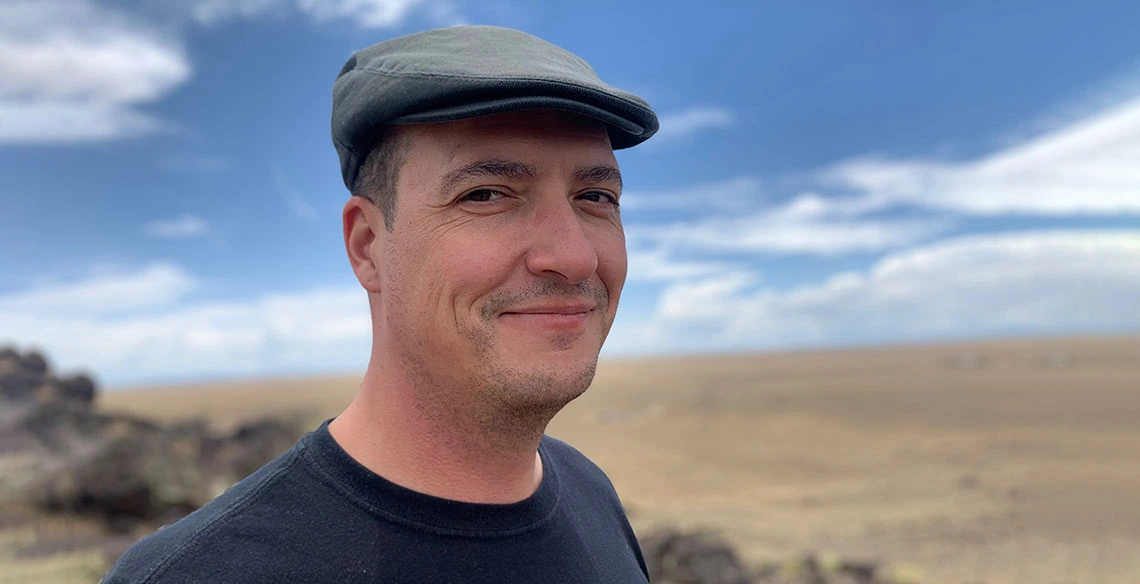
"Follow your passion. The field is big—and growing. If you are interested in social justice, equity and resilience, the built environment is a great way to make an impact."
“There’s still much work to do in addressing the legacy of systemic racism and structural inequalities in our political economic system,” says Forest Replogle, a transportation planner for Albuquerque’s Mid-Region Council of Governments Metropolitan Planning Organization.
That’s an interesting and wise take from the New Mexico native, particularly considering his path to equitable community planning was launched from behind the “sea whiz,” a 20 mm anti-air, anti-missile autocannon aboard a U.S. Coast Guard ship.
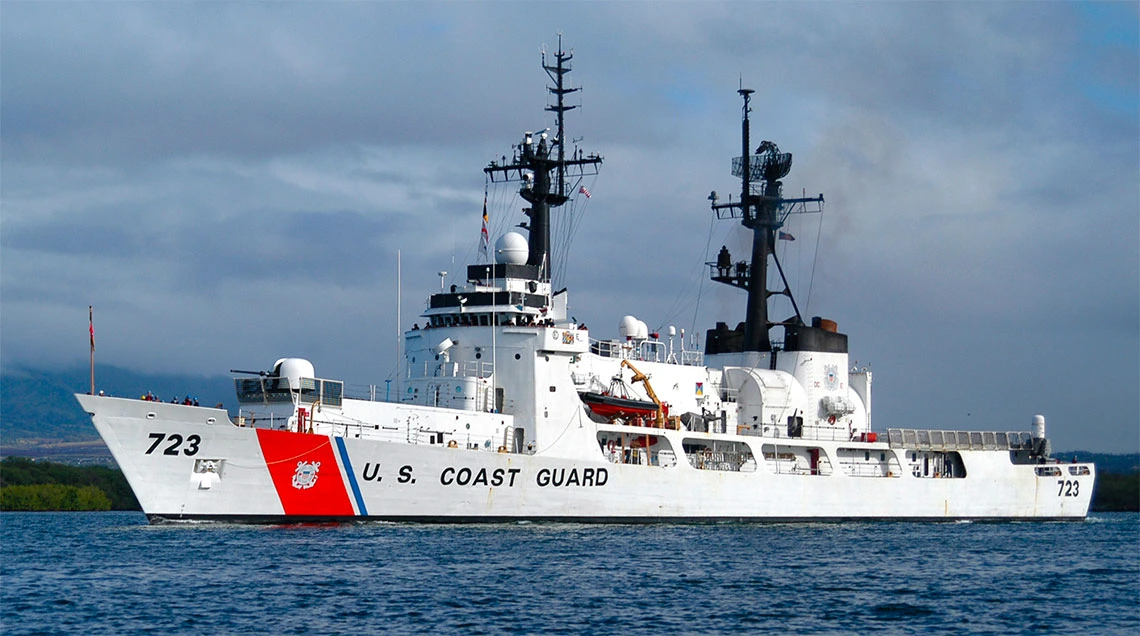
The U.S. Coast Guard Hamilton-class cutter Rush (WHEC 723), upon which Forest Replogle served. Photo courtesy U.S. Navy and Wikimedia.
As an electronics technician with the Coast Guard, Replogle was stationed in Virginia, Hawaii and California, but traveled extensively in the Pacific, making stops in China, South Korea, Japan, Canada, Mexico, Guatemala, El Salvador, Nicaragua, Costa Rica, Panama and Ecuador.
“The experience of visiting so many cities and cultures helped me think about how the built environment affects health, wealth and ecology,” says Replogle, who served for eight years after spending several semesters at the University of New Mexico. “It’s what got me interested in the field of planning, and particularly equity and environmental resilience.”
After his discharge, Replogle returned to UNM and earned his Bachelor of Arts in Environmental Planning and Design. With a desire to hone his focus on equity and resilience while adding tangible skills in spatial analysis and geographic information systems—and thanks in part to a scholarship—he then enrolled in the University of Arizona’s Master of Science in Planning program (now MS Urban Planning).

Environmental sensitivity analysis of the Santa Cruz Watershed. Graphics by Forest Replogle.
He graduated from the College of Architecture, Planning and Landscape Architecture in 2016 with a concentration in Environmental and Regional Planning, finding the program “gave me experience working with related disciplines, which really helps me today,” he says. “I felt very well-prepared when I began my professional career.”
That preparation was thanks in part to Replogle’s diverse practical and academic experiences while in the program, which included volunteering for the Living Streets Alliance and Town of Sahuarita Planning and Zoning. He concluded his graduate program with an interdisciplinary capstone project as part of a student team. Their assignment: create the Town of Marana Parks, Recreation, Trails and Open Space Five-Year Update and Strategic Plan. Replogle’s contributions centered on spatial suitability analysis and mapping, but even with a renewed focus on technology, he never lost his passion for creating more equitable communities.
Since joining the Mid-Region Council of Governments, he’s become the equity and resilience staff expert. Like his path to planning, though, his leadership in this area has also followed a less charted course.

Pen-and-colored pencil drawing by Forest Replogle from a photo he took when visiting Granada, Nicaragua.
“You may find yourself working in an area that you hadn’t expected,” he says. “My focus in school was environmental planning and I never thought I would be in transportation. I got my foot in the door and have been able to pursue these important interests thanks to federal mandates on climate change and social justice. It’s all relevant, and that’s very satisfying.”
The mandates date back to 1994’s Federal Actions to Address Environmental Justice in Minority Populations and Low-Income Populations executive order, which requires each federal agency to “make achieving environmental justice part of its mission by identifying and addressing, as appropriate, disproportionately high and adverse human health or environmental effects of its programs, policies and activities on minority and low-income populations.”
More recently, 2021’s Executive Order 13985, On Advancing Racial Equity and Support for Underserved Communities through the Federal Government, requires federal agencies—including regional planning organizations through the Federal Highway Administration and U.S. Department of Transportation—to develop plans for improving equity.
The mandates have led to Replogle’s role in developing an equity index for the Albuquerque metropolitan area to help with prioritizing locations for transportation project funding. “For example, projects located in census tracts that have a concentration of populations of concern can receive additional points in scoring if they provide benefits to those communities,” he says. “It’s a challenging task, because it isn't always clear if a transportation project will benefit or burden a community. Depending on the design of the index, considerations for some populations could overshadow those of others who also have special needs.”
The 2018 Environmental Justice Index has been incorporated into the Connections 2040 Metropolitan Transportation Plan, though Replogle points out that the MPO is “in the process of updating and expanding upon how we do environmental justice and equity assessment for the region, so the previous index is already out of date and not really reflective of current best practices.”

Network analysis for improving trail network connectivity and access for the Town of Marana, Arizona. Graphic by Forest Replogle.
Replogle is rolling up his sleeves once again to put his passion into practice as he leads the continuing effort to integrate equity into the region’s transportation planning efforts. And putting passion into practice is his advice for planning students and those just starting out in their career, as well: “Follow your passion. The field is big—and growing. If you are interested in social justice, equity and resilience, the built environment is a great way to make an impact. And when you do what you care about, it feels good.”
He recognizes, too, that jobs are not interesting or fun all the time. “But if you care about what you’re doing,” he concludes, “it is satisfying to make a difference in your job and in the world.”


