

Rachel Hink’s BWS Internship Brings Design to CanStruction

For fifth-year B.Arch student Rachel Hink, her summer internship with BWS Architects provided a chance to experience architecture beyond the classroom. Among her most memorable experiences was participating in CanStruction, a community outreach event benefiting the Community Food Bank of Southern Arizona.
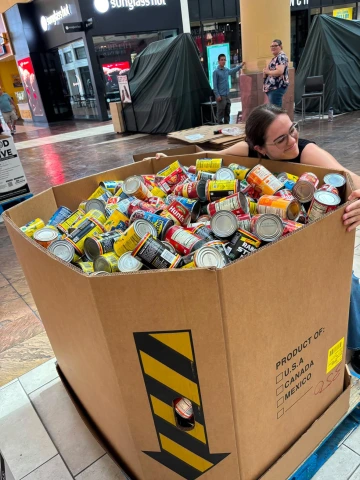
“I was drawn to BWS Architects because of the type of work they do for the communities around them,” she said.
During her internship, Hink’s responsibilities ranged from helping with social media content and developing site plans to attending owner-architect-contractor meetings and visiting completed projects. One project that was especially meaningful was following the renovation of the Modern Languages Building through weekly owner-architect-contractor meetings.
“The most rewarding part of this experience has been seeing how much the firm cares about each of their projects and clients as well as each other in the office,” she said. “The family dynamic has made this time that much more valuable and comfortable, especially to someone like me, where this is my first time interning with an architecture firm.”
Hink was introduced to CanStruction during her first week at BWS. This year’s “fun and games” theme inspired BWS Architects, Zona Technical Engineering and Lloyd Construction to create two Rubik’s Cubes using just under 4,000 cans, with the larger structure reaching over six feet tall.
Hink was in charge of developing the Rubik’s Cube design and organizing the assembly steps. She did research on the types, sizes and quantities of cans they would be using and provided step-by-step instructions for build day.
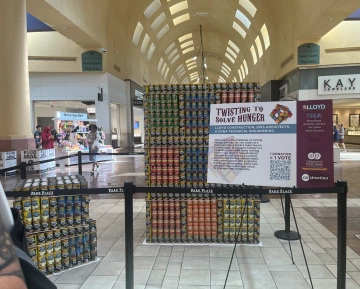
The project gave Hink experience collaborating with professionals across architecture, engineering and construction. Each team brought different expertise to the project, from acquiring materials to constructing and assembling the sculpture.
“It was an amazing opportunity to collaborate because everyone brought a unique perspective and assistance to the process,” she said.
For Hink, CanStruction connected classroom concepts with a community-focused project. The experience required design, construction knowledge, structural thinking and clear communication, but also encouraged her to approach architecture creatively.
“A lot of our studies at CAPLA center around developing buildings and structures that aid in human or environmental protection, so this was a great way to combine construction and design knowledge into a piece of art that would ultimately support the local community and those in need on a simple, human level,” she said.
Once the CanStruction display ended, the cans were donated to the Community Food Bank of Southern Arizona.
“After working with the food bank, I feel more connected to the city of Tucson and I can clearly see the impact that food insecurity has on people’s lives,” she said. “I feel very lucky to work with a firm that wants to help combat those types of issues.”
The experience reinforced Hink’s belief that architecture and community engagement should work together. Through her internship, she gained a greater appreciation for the many people and disciplines required to bring a project to life.
“I have always thought architecture and community engagement should go hand in hand because architecture and design is primarily for people, so they should work in tandem to help people, especially those in need,” she said.
This year, Hink will continue her architecture degree and accelerated master’s program in urban planning.


