

Growing Impact: Advancing Knowledge of Urban Desert Tree Care
2026 ASLA Student Awards
Growing Impact: Advancing Knowledge of Urban Desert Tree Care
2026 ASLA Student Awards
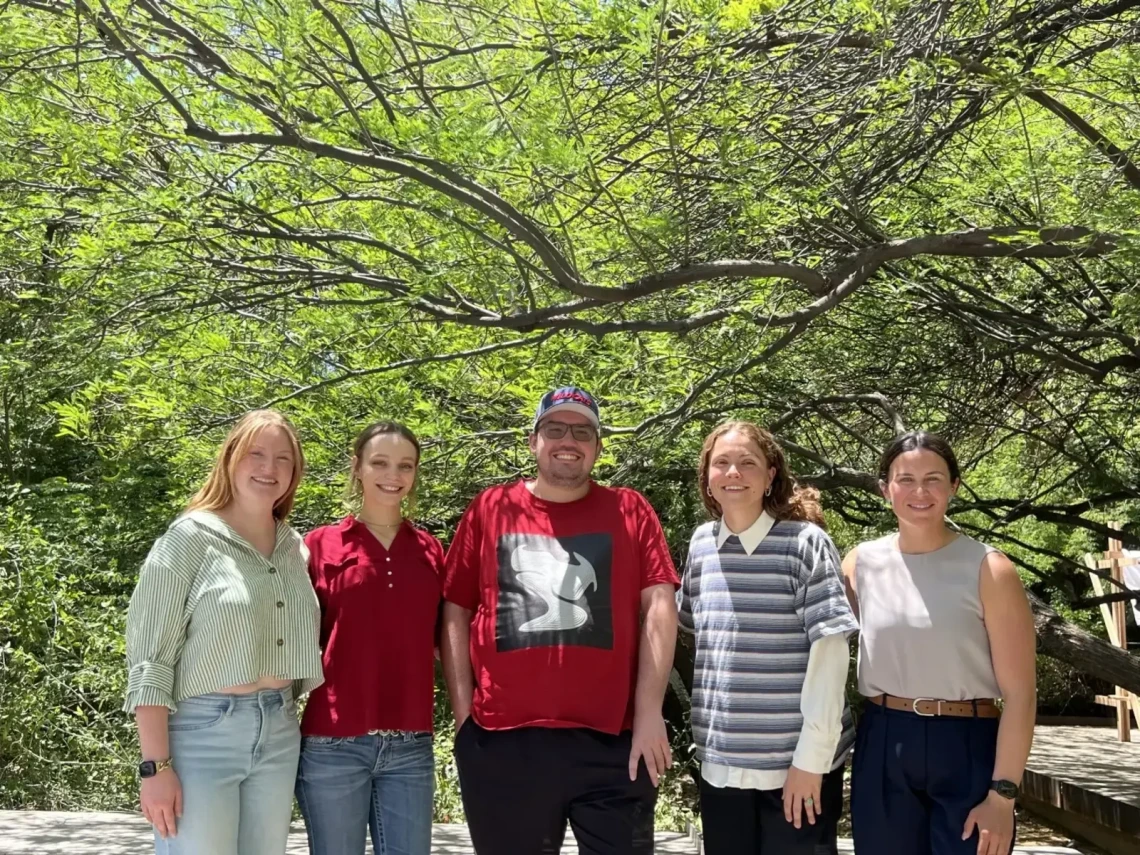
Ashley Zahri Danforth, Student ASLA; Robin Tittelbaugh; Xavier Fernandez, Student ASLA; Danielle Covey, Student ASLA; Esmeralda Carrasco, Student ASLA
This appears to be a very well-thought-out and implemented communication piece with multiple avenues for clearly articulated educational information. The consistent examples of inclusive engagement and very clear and easily understandable information will ensure this is a successful program for an important cause!
—Awards Jury
Project Statement
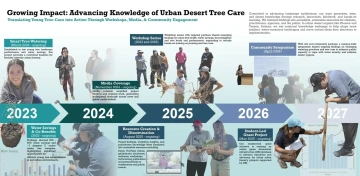
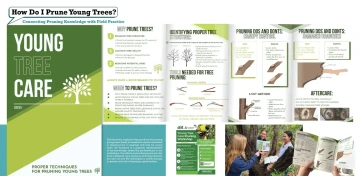
The objective of this project is to create a knowledge hub for public education and engagement on tree care and maintenance to increase urban forestry benefits in desert cities of southern Arizona. From 2023-2026, the team has engaged practitioners, government agencies, and the public through workshops, public lectures, and hands-on training on young tree care, smart watering systems, and pruning techniques. The project has produced resources freely accessible to the public, including webinars, hands-on sessions, training videos, project flyers, and a Guidebook on Tree Health and Maintenance for Climate Adaptation in the U.S. Southwest for the Arizona Department of Forestry and Fire Management's public resource library.
Project Narrative
Project goal — Urban forestry as an imperative for climate adaptation and mitigation: The project addresses a critical knowledge gap among the public regarding best practices for using urban forestry to support climate adaptation and mitigation. Focusing on arid urban environments in Southern Arizona, which encompass more than 5.8 million people, this four-year project has established a network of partnerships centered on landscape architecture and uses the university as a knowledge hub for dissemination, public education, and engagement.
Project outcomes — Applied knowledge for the public and professionals: From 2023 to 2026, the project team conducted five workshops and multiple hands-on educational activities at the University of Arizona Campus Agricultural Center and on the main campus. These activities were structured to support knowledge co-production with community members and professionals around smart tree watering, and young tree care and maintenance.
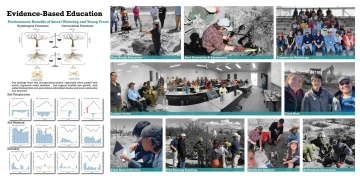
Project outcomes from the training sessions have been communicated widely to the public via webinars (EPA, City of Tucson, Pima County), YouTube channels, social media, conference presentations, and printed project-impact flyers and brochures. Key topics include: (1) smart tree watering and young tree establishment (low-water-use and drought-tolerant species, smart watering technologies); (2) young tree planting and care (proper planting, watering, and long-term goals); (3) healthy tree structure (exploring diverse branching patterns and identifying problematic branching); (4) tree pruning best practices (current practices and considerations for young tree pruning and care); and (5) hands-on sessions (gaining practical experience by synthesizing and sharing experiences to prune different tree species and understand maintenance dos and don'ts).
Project communication — Enhancing collective capacity in arid urban environments: The project has demonstrated strong participation and capacity building. More than 200 people have participated in the workshops and training sessions. This diverse group of attendees includes professionals in the landscape industry, landscape company owners, nursery professionals, municipal, county, and city employees and contractors, landscape architects, arborists, college students (undergraduate, master's, and doctoral levels), high school students, non-profit representatives, garden educators/enthusiasts, community members associated with various garden clubs and Arizona Cooperative Extension, and faculty from more than seven colleges at the University of Arizona and Arizona State University, as well as the Arizona Experiment Station.
Project Credits
Vanessa Buzzard, Grant McCormick, Douglas Loy, Shujuan Li, Annamaria Pongratz, Ursula Schuch, Tanya Quist, Chris Stebe, Emily Haworth, Christopher Matthew Nacion, Emma Chee, Louli Ziels, Sandra Obenour-Dowd, Zhihua Wang, Tianfang Xu — University of Arizona and Arizona State University
- Nicole Gillett, Blue Baldwin, Irene Ogata, Stephen Addison, Jon Choi, Brooke Bushman, David Marhefka, Xochilt Coronado-Vargas, Candice Rupprecht — City of Tucson
- Richard Adkins — City of Tempe
- Brett Blum, Kristen Vann, Julie Perez, Alex Chavez, Dan Nelson, Francisco Danese, Jesus Diaz, Sandy Mitchell, Sarah Noelle, Gilbert Walker, Lauren Stock — Southern Arizona Experiment Station
- José Cano, Stephen Spikes — Pima Smartscape
- Randall Port — Urban Forestry of Tucson
- Timara Crichlow, Alison Faller, Madeline Burton, Lorianne Barnett Warren, Cori Dolan — Arizona Department of Forestry and Fire Management
- Katie Gannon, Rebecca Johnson, Sasha Timpson, Christian Aguilar Murrieta, Angelantonio Enriquez Breault, and NatureWorks Graduates 2026 — Tucson Clean & Beautiful
- Nichole Casebeer, Matthew Luthern — Pima County Regional Flood Control District
- Kenneth Polasko, Nicholas Opich — Arizona Board of Regents
Plant List
- Canyon Hackberry
- Desert Willow
- Ironwood
Iron Linnert Oak


